
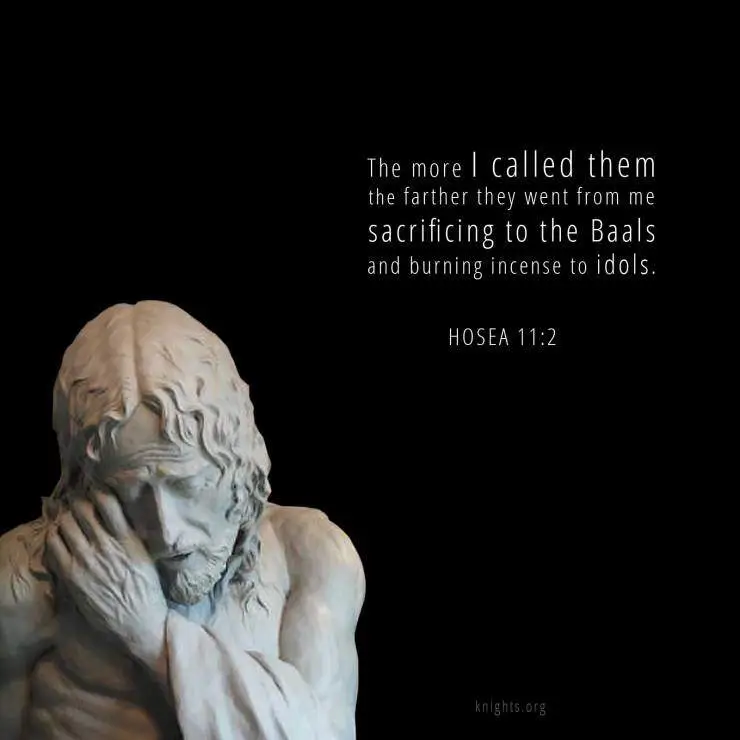
Closer to Us Than We Want Him to Be
Many would prefer to keep God at a safe distance.
We push Him into the far reaches of the cosmos — the Watchmaker God, the abstract Principle, the distant Being who sets things in motion and then steps aside. Even sophisticated language about science, randomness, or autonomy can serve the same purpose: creating space between ourselves and the unsettling nearness of God.
But the God revealed in Jesus Christ refuses to remain distant.
He draws closer than we are comfortable with.
Closer than our arguments.
Closer than our defenses.
Closer than our carefully maintained independence.
The Christian God is not content to remain an idea. He enters history, takes on our humanness, and walks among us. Lest we relegate Him to royalty, He chose to be born in poverty. Lest we claim He had the privilege of fame, He lived most of His years in a hidden life. Lest we dismiss Him as omniscient and immortal, He handed Himself over to suffering and death. This is not the behavior of a distant deity. This is the posture of a loving God who desires communion.
Yet it is precisely this closeness that disturbs us.
A distant God can be discussed.
A distant God can be managed.
A distant God can be admired without requiring conversion.
Closeness requires response
But a God who is near — a God who knows us, sees us, and remains with us — requires something more. His presence exposes our evasions and unmasks our attempts to control our own lives. The nearness of God reveals not only His boundless love, but our reluctant resistance.
In the Eucharist, this closeness reaches its summit.
Here, Christ does not merely speak to us or inspire us. He remains. He abides. He gives Himself to us — body to body. The Lord of heaven and earth makes Himself vulnerable — silent, hidden, and dependent upon our reverence.
This is a closeness that we did not invent and cannot dilute.
Redemptive not sentimental
The Eucharistic Lord does not stand at a distance offering advice. He draws near to heal, to sanctify, and to remain. He comes close not because we are worthy, but because we need Him. His closeness is not sentimental; it is redemptive.
This is where resistance often arises.
It is easier to speak about God than to remain with Him.
Easier to analyze faith than to surrender to it.
Easier to admire Christ than to open our hearts and allow Him to dwell within us.
Yet the Christian life is not an exercise in maintaining a safe distance. It is a call to abide — to choose to remain with the One who has already chosen to remain with us.
The closeness of God is not an idea to analyze, but a presence to receive.
If we find ourselves uneasy with how near God has come, it may be because His nearness beckons for trust rather than control, surrender rather than strategy. Still, He does not withdraw. He waits — patiently, quietly — closer to us than we want Him to be, and closer than we could ever deserve.

St. Martin of Tours: Soldier, Monk, and Bishop
Originally published November 11, 2015. Revised and expanded October 3, 2026. Feast-day details refreshed October 11, 2026. St. Martin of Tours is remembered throughout
What Is a Rorate Mass? Meaning, History, and Advent Hope
Discover the meaning and history of the Rorate Mass, a candlelit Advent Mass honoring Mary and awaiting Christ, the Light of the World.
St. Juliana of Liège: The Saint Behind Corpus Christi
Revised October 5, 2026, drawing on Benedict XVI’s teaching on St. Juliana and the origins of Corpus Christi. St. Juliana of Cornillon and the

Living the Catholic Liturgical Calendar: A Practical Guide
Learn how to live the Catholic liturgical calendar through Sunday Mass, prayer, seasons, saints, and simple practices at home.

Bob and Dolores Hope: A Catholic Story of Faith
Revised October 5, 2026: This article was expanded and carefully sourced to reflect Bob Hope’s conversion to Catholicism and the Hopes’ papal honors. Bob

Catholic Teaching on Original Sin: Wound and Hope
Catholic teaching on original sin explains humanity’s wound, Baptism’s grace, hope for unbaptized infants, and Christ’s victory over sin and death.
Paschal Candle Meaning: Christ, Our Easter Light
The Paschal candle proclaims Christ risen from the dead. Learn its symbols, its liturgical use, and how its Easter light shapes Christian life.
St. Lawrence of Brindisi: Friar, Doctor, and Apostle
St. Lawrence of Brindisi joined Franciscan prayer, Scripture, and Eucharistic devotion with tireless service as a Capuchin friar and Doctor of the Church.
Is Hallelujah a Christian Song? A Catholic Answer
Is “Hallelujah” a Christian song? Leonard Cohen’s famous song uses biblical names and a sacred word, but it does not proclaim the Christian faith
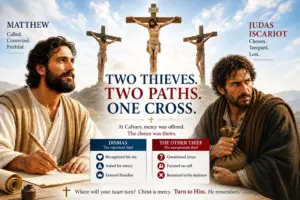
To Die Like A Thief
On one side, a thief. On the other side, another thief. Two men, yet two very different responses to the same moment. We know