Closer to Us Than We Want Him to Be
Many would prefer to keep God at a safe distance.
We push Him into the far reaches of the cosmos — the Watchmaker God, the abstract Principle, the distant Being who sets things in motion and then steps aside. Even sophisticated language about science, randomness, or autonomy can serve the same purpose: creating space between ourselves and the unsettling nearness of God.
But the God revealed in Jesus Christ refuses to remain distant.
He draws closer than we are comfortable with.
Closer than our arguments.
Closer than our defenses.
Closer than our carefully maintained independence.
The Christian God is not content to remain an idea. He enters history, takes on our humanness, and walks among us. Lest we relegate Him to royalty, He chose to be born in poverty. Lest we claim He had the privilege of fame, He lived most of His years in a hidden life. Lest we dismiss Him as omniscient and immortal, He handed Himself over to suffering and death. This is not the behavior of a distant deity. This is the posture of a loving God who desires communion.
Yet it is precisely this closeness that disturbs us.
A distant God can be discussed.
A distant God can be managed.
A distant God can be admired without requiring conversion.
Closeness requires response
But a God who is near — a God who knows us, sees us, and remains with us — requires something more. His presence exposes our evasions and unmasks our attempts to control our own lives. The nearness of God reveals not only His boundless love, but our reluctant resistance.
In the Eucharist, this closeness reaches its summit.
Here, Christ does not merely speak to us or inspire us. He remains. He abides. He gives Himself to us — body to body. The Lord of heaven and earth makes Himself vulnerable — silent, hidden, and dependent upon our reverence.
This is a closeness that we did not invent and cannot dilute.
Redemptive not sentimental
The Eucharistic Lord does not stand at a distance offering advice. He draws near to heal, to sanctify, and to remain. He comes close not because we are worthy, but because we need Him. His closeness is not sentimental; it is redemptive.
This is where resistance often arises.
It is easier to speak about God than to remain with Him.
Easier to analyze faith than to surrender to it.
Easier to admire Christ than to open our hearts and allow Him to dwell within us.
Yet the Christian life is not an exercise in maintaining a safe distance. It is a call to abide — to choose to remain with the One who has already chosen to remain with us.
The closeness of God is not an idea to analyze, but a presence to receive.
If we find ourselves uneasy with how near God has come, it may be because His nearness beckons for trust rather than control, surrender rather than strategy. Still, He does not withdraw. He waits — patiently, quietly — closer to us than we want Him to be, and closer than we could ever deserve.

What Does God See?
What Does God See? There is something deeply scriptural about stones and archways. They mark thresholds. They invite passage. They ask something of the
Obedience: Service Not Weakness
Christian Obedience: Service Not Weakness “I did it my way.” These famous words from a Frank Sinatra song have become more than just a
The Gifts and the Giver
Learning to Receive Instead of Control Much of modern life is built around control. We plan, manage, optimize, and protect. We measure success by
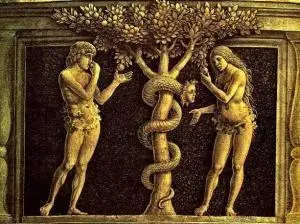
Passing the Buck in Eden: Mary the New Eve and the Immaculate Conception
Mary, the New Eve, restores what was broken in Eden. Learn how the Immaculate Conception calls us to stop passing the blame and embrace humility.

Latin Quotes Calling Us to Conversion
A reflection on Latin proverbs drawn from Scripture and the Christian tradition that call us to vigilance, repentance, and conversion — today, not tomorrow.
Christianity is more than a survival guide
Christianity Is More Than a Survival Guide Many people remember the lessons of their Christian upbringing only during difficult times. Because of this tendency,

Becoming Little Before God
Becoming Little Before God The Gospel overturns our instincts about greatness. We imagine greatness as influence, achievement, and strength that stands above others. But
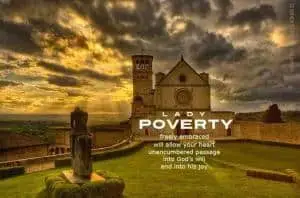
A Franciscan Understanding of Poverty
A Franciscan Understanding of Poverty When people hear “poverty,” they often think of misery, deprivation, or failure. But in the Franciscan tradition, poverty is

Advent: Time to Reconnect with God
The Challenge of Celebrating Advent in a Secular World When it comes to Advent, it can be a strange and often overlooked season