
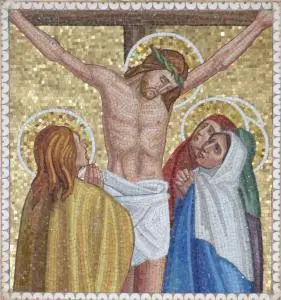
Why the World Fears the Cross
The Cross is not merely a religious symbol. It is a revelation.
It reveals what love truly looks like: not power protecting itself, but love pouring itself out. And this is precisely why the world fears the Cross.
The Cross — a Contradiction
The world prefers strength that dominates, success that impresses, and freedom without limits. The Cross contradicts all three. The Cross announces that the deepest power is self-gift, that the truest success is fidelity, and that the highest freedom is obedience to love.
This revelation is unsettling.
The Cross also exposes illusions. It reveals that human control is fragile. It reveals that suffering cannot be eliminated by intelligence or wealth. It reveals that we will all face the question: What do we do when we cannot fix things?
Many people respond by avoiding the Cross. They don’t necessarily by rejecting Christianity outright, but by reshaping it into something manageable: a faith without sacrifice, a Gospel without repentance, a spirituality without obedience.
But Christ does not offer a Cross-less discipleship.
The Cross is not an accident. It is the path love takes in a fallen world.
A Sign of God’s Enduring Love
To look at the Cross honestly is to see a God who refuses to save Himself by abandoning us. It is to see a Lord who chooses humiliation rather than revenge. It is to see love enduring pain for the sake of mercy.
That kind of love is dangerous — because it cannot be bought, threatened, or manipulated.
The Cross also calls us to conversion. It challenges our desire for comfort rather than for holiness. It asks us to forgive, to repent, to bear burdens, to suffer with the suffering, and to love when love costs something.
The Cross is feared because it demands the death of the false self.
Rooted in Love
In a Franciscan life, we return to the Cross again and again, not to immerse ourselves in a grim spirituality but to encounter truth. Joy without truth is fragile. Peace without surrender is shallow. Yet the joy that flows from the Cross endures because it is rooted in love.
The Eucharist, too, is inseparable from the Cross. The Mass is not a religious performance; it is the sacramental presence of Christ’s self-offering. The Church does not merely remember Calvary; she enters its mystery and receives its fruit.
This is why Eucharistic life forms courage. If Christ offers Himself, then we can offer ourselves. Not in dramatic ways, necessarily, but in daily fidelity: patience, honesty, humility, service, hidden sacrifice.
More than Inspiration
The Cross is feared because it cannot be reduced to an inspiring message. Rather, it commands us to live authentically. The Cross says: Love must become real, pour itself out, bear fruit.
Yet the Cross is also merciful, a gift guiding us toward the path of complete wholeness, sincere love, and deep joy. Christ does not ask us to carry what He has not carried first. He does not command without grace. He gives Himself, and that gift becomes strength within us.
If you fear the Cross, do not be ashamed. Bring that fear to Christ. Ask for the grace to trust. Ask for the courage to love.
The world fears the Cross because it reveals the truth.
But the Christian embraces the Cross because it reveals the Heart of God.