
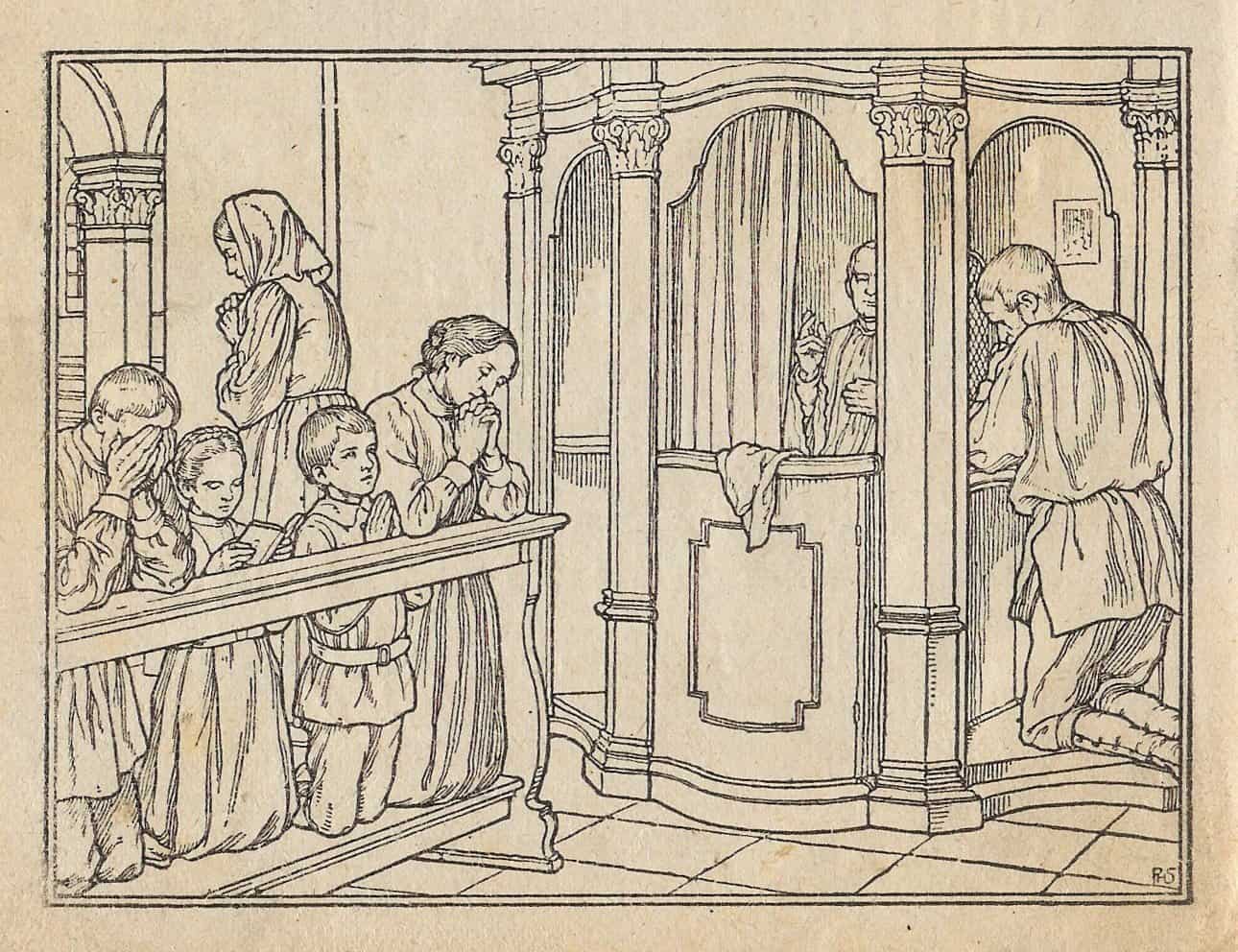
What Is Mortal Sin? Catholic Definition and Conditions
Lent invites us to examine our hearts. As ashes are placed on our foreheads, we hear the sobering words: “Remember that you are dust, and to dust you shall return.” The Church calls us to repentance, prayer, fasting, and confession.
But what exactly are we repenting of? What is mortal sin — and why does it matter so much?
Understanding what is mortal sin is essential to understanding the seriousness of sin, the beauty of grace, and the mercy of God.
What Is Sin?
Sin is more than a mistake. It is not merely weakness or imperfection. Sin is a deliberate turning away from God.
At its root, sin is an offense against love — a violation of the great commandment to love God above all things and to love our neighbor as ourselves.
Every sin wounds our relationship with God. But not all sins wound it in the same way.
Sacred Scripture and Catholic Tradition clearly distinguish between venial sin and mortal sin (Catechism of the Catholic Church 1854–1864). Understanding the difference between mortal and venial sin helps us see why the Church speaks so seriously about mortal sin.
What Is Mortal Sin? (Catholic Definition)
Mortal sin is sin that destroys sanctifying grace in the soul.
When we are baptized, we receive sanctifying grace — the very life of God dwelling within us. Mortal sin is called “mortal” because it brings spiritual death. It severs our friendship with God. It is a radical rejection of His love.
This is not symbolic language. It describes a real spiritual condition.
Sacred Scripture confirms this reality: “There is sin which is mortal” (1 John 5:16).
When a person freely commits mortal sin, he chooses something created over the Creator. He effectively says, “I prefer this to You, Lord.” That is why the mortal sin definition always involves a serious rupture in our relationship with God.
The Three Conditions for Mortal Sin
The Church teaches that three conditions must be present for a sin to be mortal. These three conditions for mortal sin come directly from Catholic moral theology and are clearly taught in the Catechism.
All three must be present.
Grave matter
Full knowledge
Deliberate consent
If one of these conditions is seriously lacking, the sin is not mortal — it is venial.
1. Grave Matter
The act itself must be seriously wrong according to God’s law.
The Ten Commandments help us recognize grave matter: murder, adultery, serious theft, blasphemy, deliberately missing Sunday Mass without serious reason, and other serious violations of charity and purity.
Not every wrong action is grave. But some actions are objectively serious, regardless of personal opinion.
2. Full Knowledge
The person must know that the act is gravely wrong.
Ignorance can lessen responsibility. However, we are responsible for forming our consciences. Choosing not to learn what the Church teaches does not excuse us from moral responsibility.
True freedom requires truth.
3. Deliberate Consent
The person must freely choose the act.
Strong emotions, fear, or psychological conditions can lessen consent. But when someone knowingly and freely chooses grave evil, the act becomes mortal.
Mortal sin always involves a serious matter, known to be serious, freely chosen.
Mortal Sin vs. Venial Sin
Understanding the difference between mortal and venial sin is essential.
Venial sin weakens charity. Mortal sin destroys it.
Venial sin wounds our relationship with God. Mortal sin severs it.
Venial sin makes us spiritually sick. Mortal sin brings spiritual death.
Venial sin can be forgiven through prayer, acts of charity, sincere repentance, and reception of the Eucharist. Mortal sin requires sacramental confession before receiving Holy Communion again.
This is why the Church urges regular confession — not only during Lent, but throughout the year.
Why Mortal Sin Matters
In a culture that minimizes sin, talk of mortal sin can sound severe. But the Church speaks clearly about mortal sin because she loves us.
God does not threaten us. He warns us.
Mortal sin matters because:
• It separates us from sanctifying grace
• It deprives us of the supernatural life of God
• If unrepented at death, it results in eternal separation from God
These truths are serious — but they are not meant to lead us to despair. They are meant to awaken us to conversion.
When we understand what is mortal sin, we begin to understand the immense value of grace.
The Good News: God’s Mercy Is Greater
The story does not end with sin.
The same Church that teaches clearly about mortal sin proclaims even more clearly the infinite mercy of Jesus Christ.
No sin — however grave — is greater than God’s mercy.
Through the Sacrament of Reconciliation, sanctifying grace is restored. What was dead lives again. The Father runs to meet the prodigal son.
Confession is not humiliation. It is resurrection.
Why This Matters Beyond Lent
Although Lent is a privileged season of repentance, the call to conversion is not limited to forty days.
Understanding the mortal sin definition is not about scrupulosity. It is about clarity. When we understand what destroys grace, we begin to cherish grace more deeply.
A healthy Catholic life includes:
• Daily examination of conscience
• Regular confession
• Frequent reception of the Eucharist
• Ongoing formation of conscience
The goal is not fear. The goal is love — love purified, strengthened, and restored.
A Final Encouragement
If it has been a long time since your last confession, do not be afraid.
The priest is not there to condemn you. He is there as a minister of Christ’s mercy.
Grace can be restored in a moment.
Whether during Lent or at any time of the year, today is always the best day to return to God.
Understanding what is mortal sin is not meant to burden us — it is meant to lead us back to life.