
Join Us on a Great Adventure for the Lord!
Our First Duty is to the King Before we serve the poor or teach the faith, we kneel. A Knight’s power comes from his daily hour of silence before the Eucharistic King. It is here that boys become men, and men become saints. If you seek a life where prayer is the heartbeat of action, you have found your home.
Will you answer His loving call?
Have a question before taking the survey? Contact the Knights about your vocation or a visit. You can begin with a question about our way of life, formation, or eligibility.
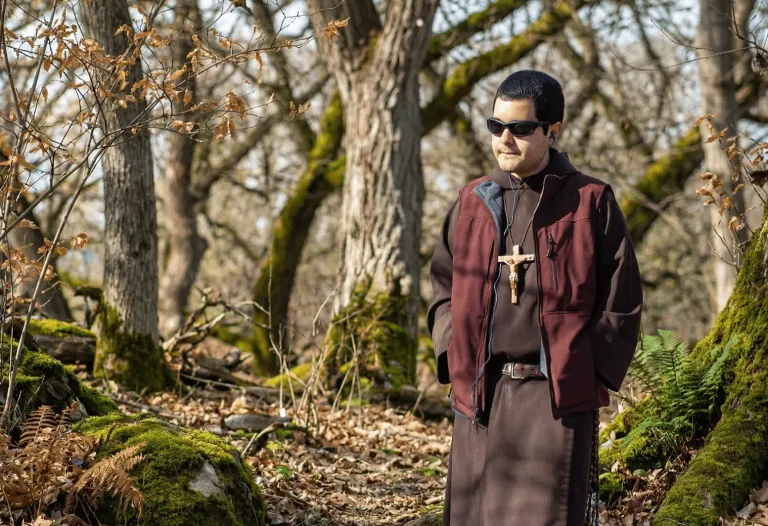
What does it take to become a Knight of the Holy Eucharist? A young man should:
- Be a single Catholic in good standing
- Have no legal responsibilities
- Have good physical and mental stability
- Be a high school graduate (18–30 years old)
- Have the ability to perform strenuous manual labor
- Have a desire to serve and not to be served
If you have questions about your eligibility or would like to learn more about our way of life, please feel free to reach out to us. Our Vocation Director would be glad to speak with you and assist you in discerning God’s call.
Are You Ready for the Battle? The world offers comfort; Christ offers a cross. We are looking for men ready to wield the spiritual weapons of the Rosary and the Eucharist. Our vocation is one of spiritual combat, fought not against flesh and blood, but for the salvation of souls in an age of indifference. If you feel called to a life of heroic virtue, standing as a watchman for the Church, step forward.
“Religious are not better than other men—they are chosen for the benefit of mankind and the glorification of God on earth. Men climb mountains, scale heights, venture into the unexplored to prove to other men it can be done. This is the witness of today’s disciples—they provide a needed witness that holiness is possible in today’s world because there is one whose Indwelling Presence accomplishes the difficult, the impossible and the miraculous—a change of life, ideals and goals.” — Mother Angelica
"You did not choose me, no, I
chose you; and I commissioned you
to go out and to bear fruit." (Jn. 15:16)
You can email us at [email protected]
or write to us via regular mail:
Knights of the Holy Eucharist
530 N 31st St.
Lincoln, NE 68503 U.S.A.
Are you called to be a Knight?
The consecrated life is challenging yet joyful and rewarding at the same time! The Knights exist to serve the Church and the wider community by prayer; adoration of the Most Blessed Sacrament; and a wide-ranging variety of apostolic works.
A Band of Brothers You will not fight alone. In our friary, you will find true brothers who challenge you, forgive you, and march with you toward heaven. As St. Francis said, “The Lord gave me brothers.” We live a common life of shared work, prayer, and recreation, supporting one another as we strive to be the saints God created us to be. Our fraternal life gives each individual support on his heavenly journey. “A religious community is a gift of the Spirit. It is the love of God, poured into our hearts by the Holy Spirit, from which religious community takes its origin and is built as a true family gathered together in the Lord’s name” (Fraternal Life in Community, Congregation for Institutes of Consecrated Life & Societies of Apostolic Life).
One of our important duties is serving Holy Mass, which we do as reverently as we can. The Knights are blessed to serve Mass in both forms, the Ordinary Form and the Extraordinary Form (Traditional Latin Mass).
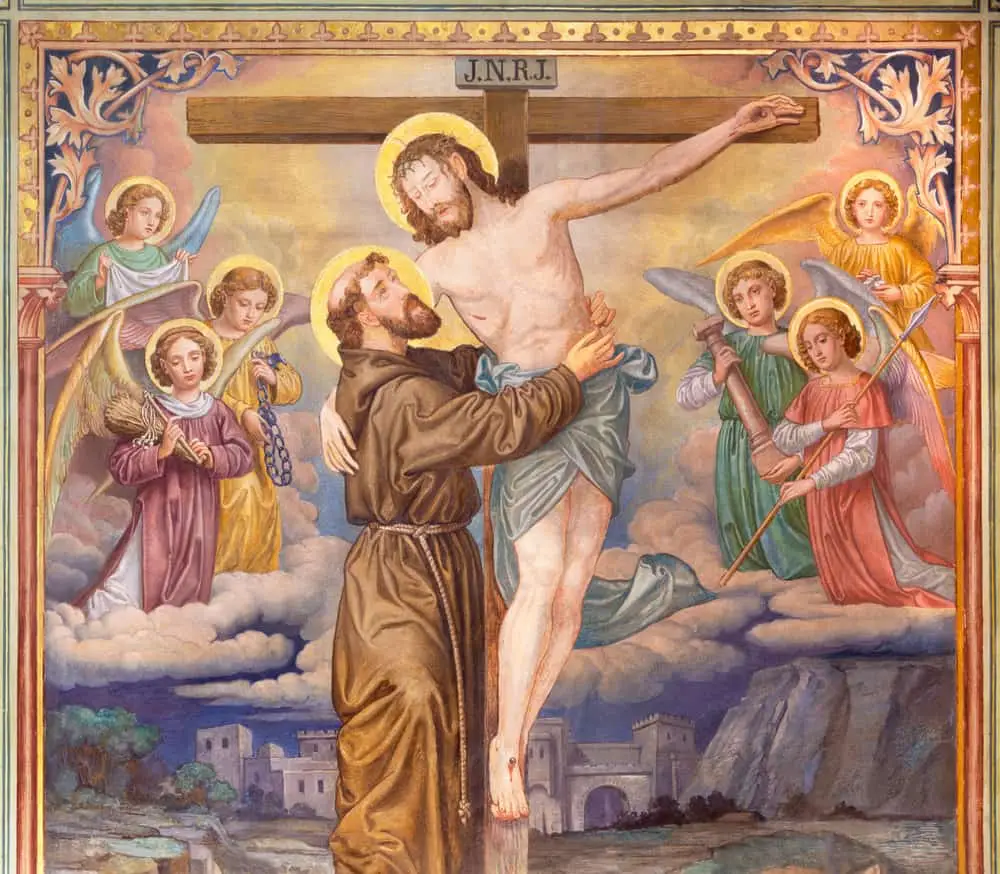
“This is the meaning of the call to the consecrated life: it is an initiative coming wholly from the Father, who asks those whom he has chosen to respond with complete and exclusive devotion. The experience of this gracious love of God is so deep and so powerful that the person called senses the need to respond by unconditionally dedicating his or her life to God, consecrating to him all things present and future, and placing them in his hands” (Vita Consecrata 17).
Take a brief survey to see if a vocation to the Knights of the
Holy Eucharist is for you!
Discerning Your Vocation
Discerning one’s vocation is a sacred and often gradual process, not a single moment of clarity or certainty. God leads each soul patiently, drawing the heart through prayer, self-knowledge, lived experience, and trust in His providence. True discernment requires time, honesty, and a willingness to listen—not only to interior movements of the heart, but also to the concrete realities God places before us.
The following five keys are offered as a framework to help guide this process. They are not steps to be rushed through in isolation, but principles to be held together and revisited over time. When approached prayerfully and faithfully, these keys help bring clarity, peace, and confidence as one seeks to respond generously to God’s call and to choose a state of life that leads to holiness.
Key 1: Understanding Your Gifts, Talents, and Skills
God’s call does not contradict the person He has created you to be. Discerning a vocation begins with honest self-knowledge—recognizing both natural abilities and spiritual gifts given by the Holy Spirit. This includes practical talents, personal interests, and charisms necessary for a particular state of life, especially the charism of celibacy for the sake of the Kingdom when discerning consecrated life.
Key 2: Recognizing Which Doors of Opportunity Are Open
A genuine vocation must be possible, not merely desirable. This key invites a realistic and humble assessment of the opportunities God has placed before you, including external circumstances, personal limitations, and decisions made by those in authority. God’s will is often revealed through doors that open—and those that close.
Key 3: Understanding the Desires of Your Heart
God often speaks through the deep and enduring desires He places within the human heart. This key helps distinguish between fleeting wishes and genuine vocational desires that persist over time and call for concrete commitment. True desires, when fulfilled according to God’s will, bear lasting peace and joy.
Key 4: Incorporating Discernment into Your Prayer Life
Discernment cannot be separated from prayer. This key emphasizes the necessity of a sacramental and devotional life—especially Eucharistic Adoration and the Rosary—so that vocational decisions flow from a living relationship with God. Here, the discerner learns to recognize God’s voice through interior peace, providential signs, and spiritual clarity.
Key 5: The Necessity of Going Out and Trying
Discernment reaches clarity through action. Whether through courtship, employment, or visiting a religious community, this key calls the discerner to step forward courageously and test what has been prayerfully considered. God’s will becomes clear when interior desire, lived experience, and mutual agreement converge.
Discerning a vocation is ultimately an act of trust. While clarity often comes gradually, God is faithful to guide the soul that seeks Him sincerely. By praying, reflecting honestly, seeking wise counsel, and courageously responding to the opportunities placed before you, discernment becomes less about anxiety and more about confidence in God’s love and providence.
If you are drawn to learn more about religious life, or to explore whether God may be calling you to the Franciscan brotherhood devoted to Eucharistic adoration, we invite you to continue this journey with patience and openness. Whatever path God reveals, He desires your holiness above all, and He will not fail to lead you where your heart may rest in peace.