
Originally published May 21, 2018; substantially revised October 5, 2026.
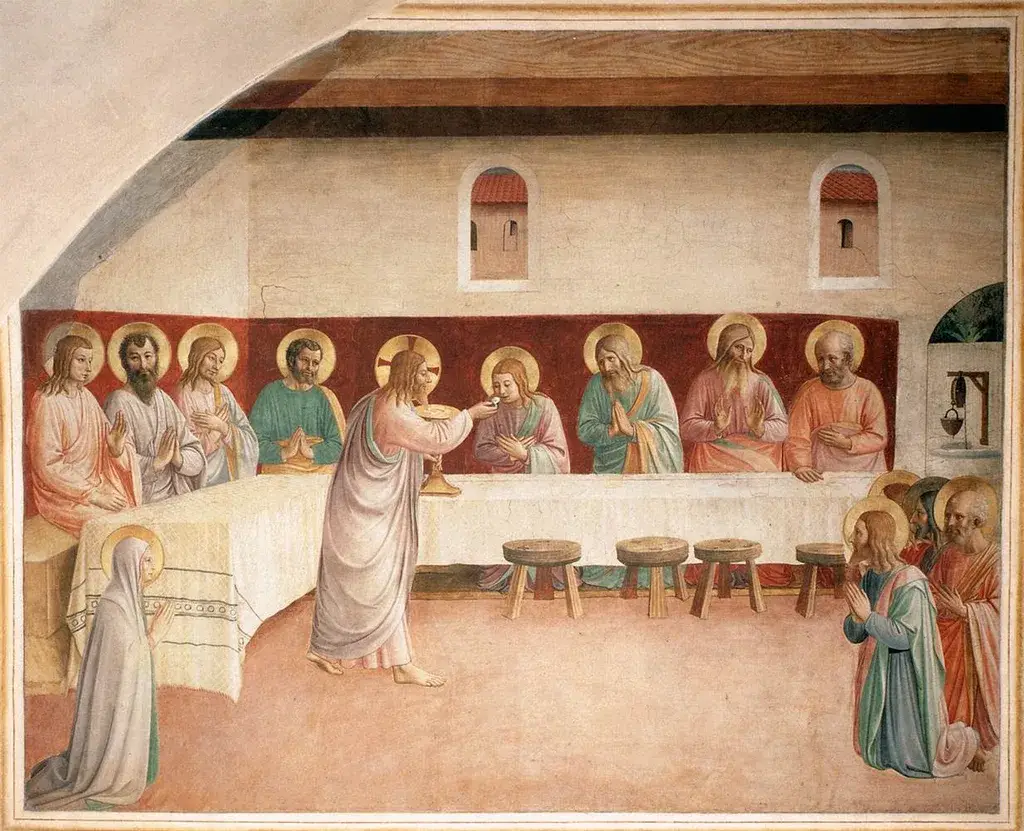
Who can receive Holy Communion? Ordinarily, baptized Catholics who are united with the Church, properly prepared, and not conscious of unconfessed mortal sin may receive the Eucharist. No one has to be spiritually perfect. These conditions exist because Holy Communion is the true Body and Blood of Christ and also a visible sign of full communion with his Church.
Below are the Church’s answers to the questions people ask most often: what a state of grace means, when Confession is needed, the Eucharistic fast, whether non-Catholics or divorced Catholics may receive, and how to receive.
Who Can Receive Holy Communion in the Catholic Church?
A Catholic who has made First Communion may ordinarily receive when properly disposed and not prohibited by Church law. To receive fruitfully and worthily, we should believe what the Church teaches about the Eucharist, approach with reverence, observe the Eucharistic fast, and be in a state of grace.
Children must have sufficient preparation and understanding before their First Communion. Catholics who are elderly, ill, homebound, or hospitalized remain part of the Church’s Eucharistic life; a parish can often arrange Communion for someone unable to attend Mass.
What Does “In a State of Grace” Mean?
Being in a state of grace means that we are not conscious of an unconfessed mortal sin. St. Paul warns Christians not to receive the Lord’s Body and Blood unworthily and calls each person to examine himself before receiving (1 Corinthians 11:27–29).
The Catechism therefore teaches that anyone conscious of grave sin must receive sacramental absolution before approaching Holy Communion (CCC 1385; 1415). Canon 916 gives the same rule. A rare exception exists when there is a grave reason to receive and no opportunity for Confession; in that case, the person must make an act of perfect contrition that includes the intention to confess as soon as possible.
If you are unsure whether something was a mortal sin, do not let anxiety make the decision alone. Speak honestly with a priest. A good confessor can help distinguish mortal sin from temptation, weakness, venial sin, or scrupulosity.
Can You Receive Communion Without Going to Confession?
Yes, if you are not conscious of mortal sin. Confession is required before Communion only when we are aware of a mortal sin that has not yet been confessed; venial sins do not bar us from receiving, and Communion itself forgives them. Regular Confession is nevertheless a great gift because it strengthens us against sin, forms the conscience, and helps us approach Jesus with greater freedom and love.
A common case is a missed Sunday Mass. Skipping Mass on a Sunday or holy day without a serious reason is grave matter, so a Catholic who did that should go to Confession before receiving again. Someone who missed Mass because of illness, caring for a sick person, bad weather, or because no Mass was available has not sinned and may receive as usual.
If you need help preparing, our guide to making a good Confession offers a simple place to begin.
What Is the Eucharistic Fast?
In ordinary circumstances, Catholics abstain from food and drink for at least one hour before receiving Holy Communion. Water and medicine do not break the fast. The elderly, the sick, and those who care for them have important exceptions under Church law.
The fast is small, but it teaches the body to join the soul in preparation. We make room for Christ and remember that the Bread of Life is unlike ordinary food.
Can Non-Catholics Receive Communion in a Catholic Church?
Ordinarily, Holy Communion is received by Catholics because sharing the Eucharist expresses full unity in faith, sacramental life, and Church governance. Christians who are not in full communion with the Catholic Church are warmly invited to pray at Mass, but ordinarily do not receive Communion. This includes Catholic weddings and funerals, where non-Catholic family and friends are welcome to join in the prayer of the Mass.
Church law provides limited exceptions, especially for members of Eastern Churches whose sacraments the Catholic Church recognizes, and in grave circumstances for certain other baptized Christians who share Catholic faith in the Eucharist, cannot approach a minister of their own community, ask freely, and are properly disposed. These situations should be discussed with the priest rather than decided privately. The USCCB guidelines for receiving Communion summarize this discipline.
Can Divorced Catholics Receive Communion?
Yes. A Catholic who is divorced but has not remarried may receive Holy Communion under the same conditions as any other Catholic. Civil divorce by itself does not bar a person from the sacraments, and many divorced Catholics did not choose the end of their marriage. The Church encourages them to stay close to the Eucharist.
The situation is different for Catholics who have divorced and entered a civil remarriage without a declaration of nullity. Because the Church holds that a valid sacramental marriage lasts until the death of a spouse, the Catechism teaches that they cannot receive Communion while this situation continues (CCC 1650). They remain members of the Church and are encouraged to attend Mass, pray, raise their children in the faith, and take part in parish life.
There are paths forward. A couple may ask the diocesan tribunal to examine whether the first marriage was valid; if a declaration of nullity is granted, they may marry in the Church. Where separating is not possible, for example because of children, Pope St. John Paul II taught that a couple who commit to living as brother and sister may, after Confession, receive the sacraments (Familiaris Consortio 84). A parish priest can explain each step with care and confidentiality.
What If Someone Publicly Rejects a Grave Moral Teaching?
A person’s private examination of conscience is governed especially by Canon 916. A minister’s responsibility in a public case is addressed by Canon 915, which concerns those obstinately persevering in manifest grave sin. These canons are related, but they are not identical: one directs the communicant’s conscience, while the other directs the minister in certain public circumstances.
Cardinal Joseph Ratzinger explained this distinction in his memorandum on worthiness to receive Holy Communion. Such cases require pastoral instruction, clarity, patience, and fidelity to the Church. They should never become an excuse for anger, gossip, or treating the Eucharist as a political weapon.
How Do You Receive Holy Communion?
In the United States, Catholics ordinarily receive Communion standing, though anyone may kneel. Before receiving, the communicant makes a bow of the head as a sign of reverence. The priest or minister says, “The Body of Christ,” and the communicant answers, “Amen.”
Communion may be received on the tongue or in the hand. To receive in the hand, place one hand beneath the other, receive the Host, step to the side, and consume it right away. When the Precious Blood is offered, the same bow and “Amen” come before receiving from the chalice.
If you are not able to receive, you may stay in the pew in prayer and make a spiritual Communion, asking Jesus to come into your heart.
After Communion, spend a few moments with Jesus in thanksgiving. The companion article on the effects of a worthy Holy Communion explains how the sacrament deepens our union with Christ, strengthens charity, and helps preserve us from sin.
A Simple Preparation Before Holy Communion
- Examine your conscience honestly and peacefully.
- Go to Confession first if you are conscious of mortal sin.
- Observe the one-hour Eucharistic fast unless an exception applies.
- Participate attentively in Mass and approach with reverence.
- Remain afterward for a few moments of thanksgiving.
Prayer Before Receiving Jesus
Lord Jesus Christ, I believe that you are truly present in the Most Holy Eucharist. Cleanse my heart, deepen my faith, and teach me to receive you with humility, reverence, and love. Keep me in the grace of your friendship, unite me more closely to your Church, and make my life a worthy thanksgiving for your gift. Amen.
If you are carrying a burden or need help returning to the sacraments, you may send the brothers a prayer request. Prayer is always free.