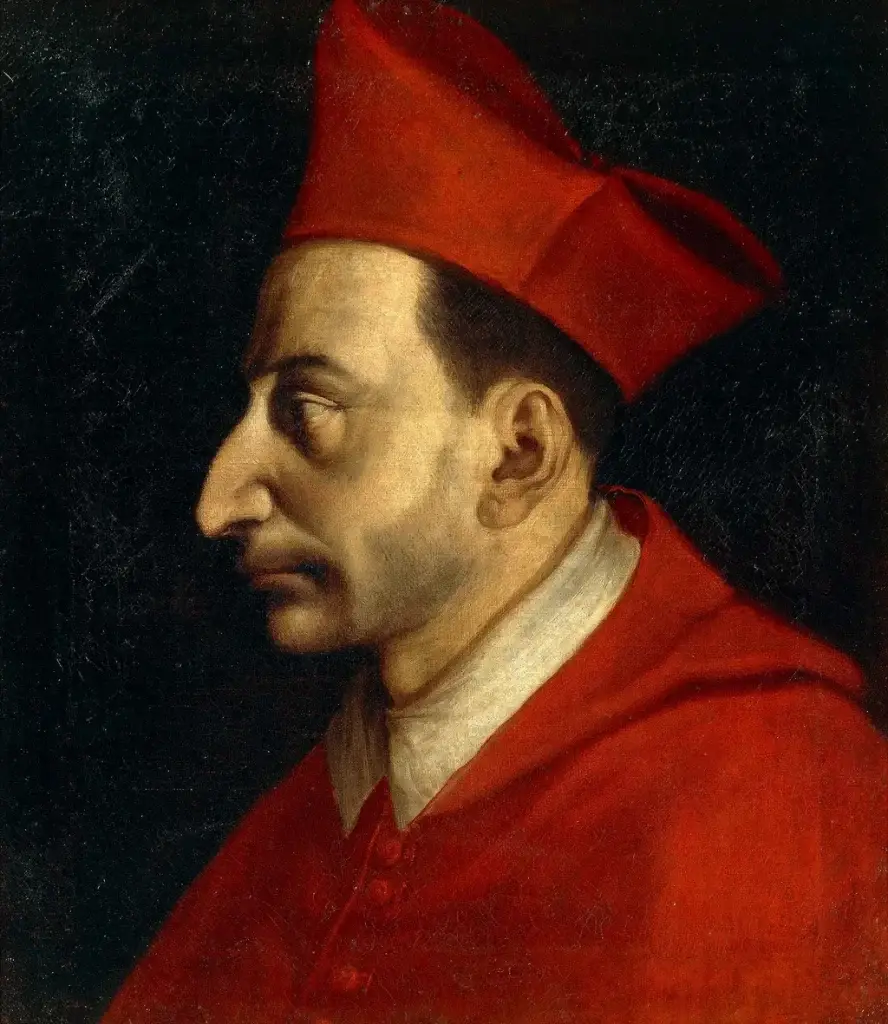
This Prayer to St. Charles Borromeo is the traditional Collect of his feast. It asks God to keep His Church safe through the protection of the great archbishop of Milan and to make us fervent in His love. A prayer written by St. Charles himself for catechists and teachers follows.
Prayer to St. Charles Borromeo
Keep safe Thy Church, O Lord, with the continual protection of St. Charles, Thy Confessor and Bishop, that, as pastoral solicitude rendered him glorious, so his intercession may ever make us fervent in Thy love. Through our Lord Jesus Christ, Thy Son, who liveth and reigneth with Thee in the unity of the Holy Ghost, God, world without end. Amen.
St. Charles Borromeo, by Giovanni Ambrogio Figino (late 16th century). Public domain.
Prayer of St. Charles Borromeo for Catechists and Teachers
Almighty God, you have generously made known to human beings the mysteries of your life through Jesus Christ your Son in the Holy Spirit. Enlighten my mind to know these mysteries which your Church treasures and teaches. Move my heart to love them and my will to live in accord with them. Give me the ability to teach this Faith to others without pride, without ostentation, and without personal gain. Let me realize that I am simply your instrument for bringing others to the knowledge of the wonderful things you have done for all your creatures. Help me to be faithful to this task that you have entrusted to me. Amen.
When and How to Pray the Prayer to St. Charles Borromeo
Pray it on November 4, his feast, or whenever you pray for bishops, priests, seminarians, catechists and Catholic schools. The first prayer is the Collect of his feast in the traditional Roman Missal (propers for November 4). Catechists and teachers may pray his own prayer before a lesson; its text follows Catholic Culture.
St. Charles Borromeo (1538–1584) was cardinal and archbishop of Milan. He helped bring the Council of Trent to completion and then put its reforms into practice: he founded seminaries, strengthened the formation of priests, taught the faith and stayed with his people to nurse the sick during the plague of 1576.
What Is St. Charles Borromeo the Patron Saint Of?
He is honored as a patron of bishops, seminarians, catechists and catechumens. His life is closely tied to the renewal of priestly formation and careful pastoral care.
Why Is St. Charles Borromeo Associated with Church Reform?
He understood reform as a return to Christ through prayer, penance, sound teaching and charity, beginning with his own life. Pope Benedict XVI described his continuing example in a message for the fourth centenary of his canonization.