
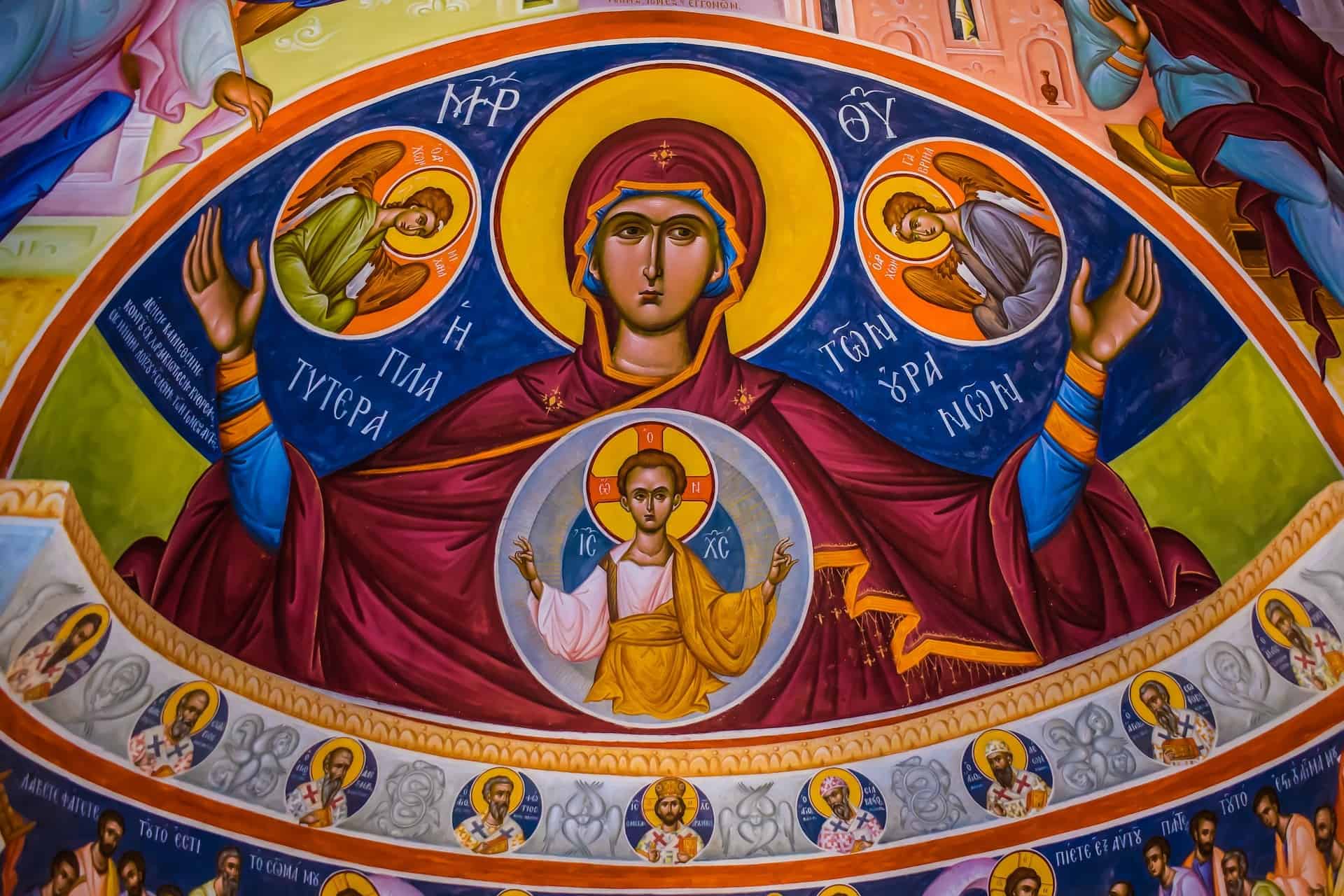
This short but meaningful prayer by St. Ephrem of Syria, deacon (c. 306-373), is still used by both the Byzantine Catholic Church and the Orthodox Church during Lent. You can pray this whenever you’d like, but it is recommended for morning, noon, and evening.
The prayer begins with a bold request: “O Lord and Master of my life, take from me the spirit of sloth, despair, lust of power, and idle talk.” These are not abstract ideas, but deeply human tendencies. Sloth is not only laziness, but spiritual apathy, the slow loss of desire for God. Despair is the heaviness that convinces the heart that change is impossible. The lust for power is the need to control, to dominate, to place oneself above others. Idle talk is the misuse of speech, words that lack truth, charity, or purpose. St. Ephrem does not soften these realities. He names them directly, because healing begins with truth.
But the prayer does not remain in what must be removed. It immediately turns toward what must be given: “But give rather the spirit of chastity, humility, patience, and love to Thy servant.” This is important. The Christian life is not only about subtraction, but transformation. The soul is not meant to be emptied and left vacant, but filled with virtue. Chastity here refers to an integrated heart, not divided or scattered. Humility is the freedom from self-deception. Patience is endurance without bitterness. Love is the fullness of every virtue, the way in which all the others are held together.
Then comes the most humbling part of the prayer: “Grant me to see my own transgressions, and not to judge my brother.” This line cuts deeply because it addresses one of the most subtle struggles in the spiritual life: self-deception. It is often easier to notice the faults of others than to face our own. St. Ephrem asks for a kind of clarity that is both honest and merciful. To see oneself truthfully, without collapsing into despair, and to see others without pride or judgment.
The prayer concludes with praise: “For blessed art Thou, unto ages of ages. Amen.” Even after such honest self-examination, the final word is not self-condemnation, but worship. The center of the Christian life is not the self, but God. Even repentance ends in praise.
Prayed consistently, this prayer slowly reshapes the heart. It does not overwhelm with complexity. Instead, it returns the soul again and again to what is essential: awareness of sin, openness to grace, and trust in God’s mercy.