
Originally published October 21, 2016. Substantially revised in October 2026 for doctrinal clarity, reliable sourcing, and pastoral usefulness.
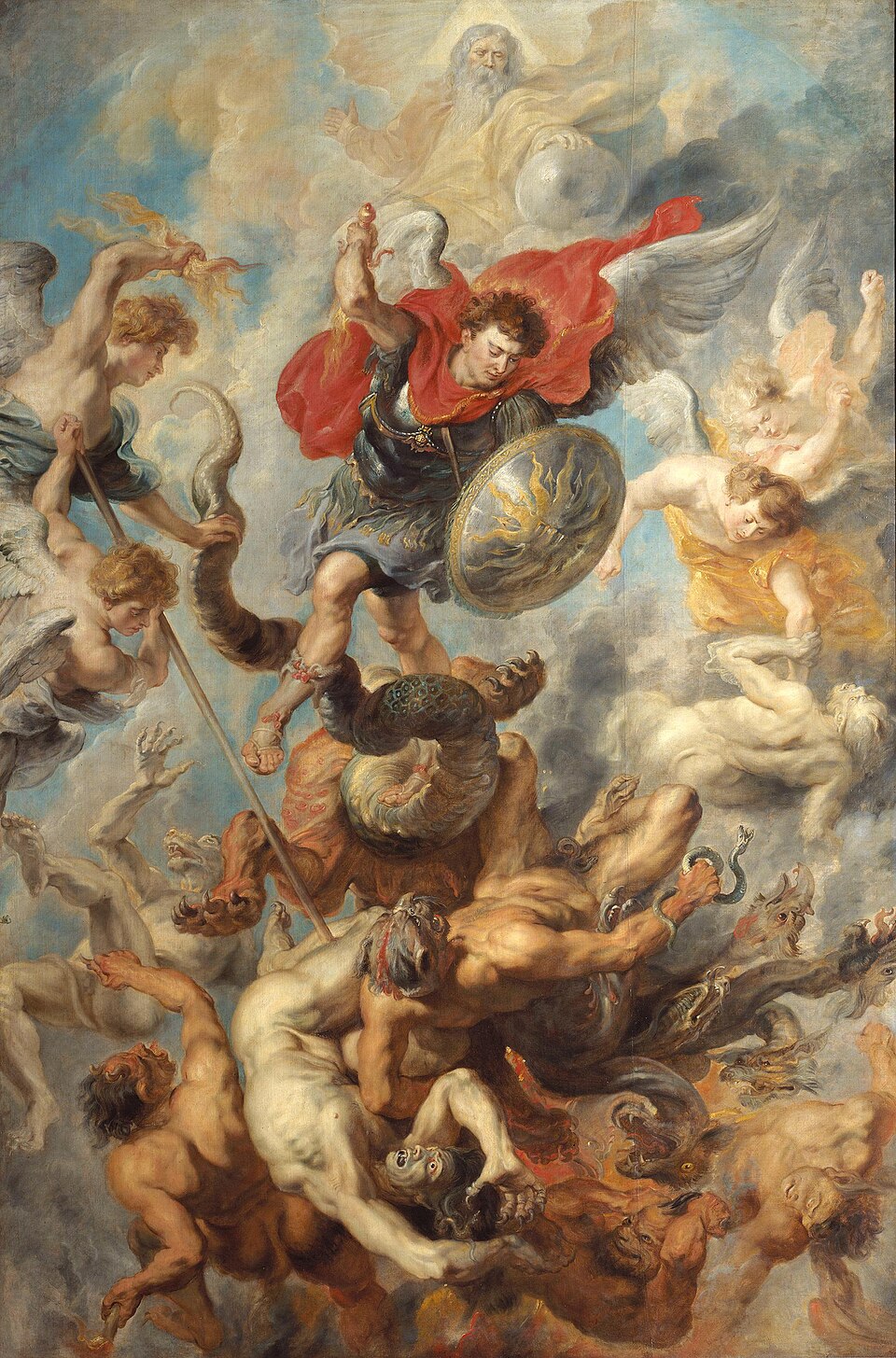
The Catholic Church teaches that Satan and fallen angels are real—but they are creatures, not rivals equal to God. They were created good, freely rejected God, and now work against His Kingdom. Their power is serious but limited, and Jesus Christ has already won the decisive victory. That balance matters: Catholics should neither dismiss the devil nor become fascinated or frightened by him.
What Does the Church Teach About Satan and Fallen Angels?
The Catechism of the Catholic Church explains that the serpent’s seductive voice in Genesis belongs to a fallen angel called Satan or the devil. Satan and the other demons were created naturally good by God; they became evil through their own free choice. Their fall was a radical and irrevocable rejection of God and His reign (CCC 391–393). Evil is therefore not something God created. It arose from the misuse of freedom by spiritual creatures whom He had made good.
Scripture calls the devil a liar and the father of lies. His characteristic work is deception: he tries to distort our image of God, weaken our trust, and entice us to choose apparent goods apart from God. Yet the Catechism immediately places this teaching within the Gospel. The Son of God appeared to destroy the works of the devil, and Satan cannot prevent the building of God’s Kingdom (CCC 394–395).
Can Fallen Angels Be Redeemed?
No. The Church does not teach that God lacks mercy toward the fallen angels; rather, their choice was definitive because of the nature of angelic knowledge and freedom. The Catechism says that the irrevocable character of their choice—not any defect in God’s mercy—makes their sin unforgivable (CCC 393). Human beings make choices gradually, amid limited knowledge and changing circumstances. The angelic choice was of a different order and fixed their direction permanently.
Are Fallen Angels the Same as Demons?
Yes. In Catholic teaching the words describe the same beings: the Catechism says plainly that “Satan or the devil and the other demons are fallen angels” (CCC 391). “Demon” names what they became; “fallen angel” names what they were. The Church does not teach a separate class of evil spirits that were never angels.
How Many Fallen Angels Are There?
Scripture gives no count, and the Church has not defined one. The image in Revelation 12:4 of the dragon sweeping a third of the stars from the sky has often been read as a reference to the angels who fell, but it is apocalyptic imagery, not a census. What matters for Christian life is not their number but their defeat: however many there are, they are creatures, and Christ has conquered them.
How Much Power Does Satan Have?
Satan is a pure spirit and therefore possesses powers natural to an angel, but he remains a creature. He is not all-knowing, all-powerful, or present everywhere. Those attributes belong to God alone. The Catechism is explicit: Satan’s power is not infinite. His activity is permitted by divine providence, which mysteriously guides history toward God’s good purposes (CCC 395).
This means Christians should avoid two opposite errors. The first is to treat the devil as imaginary and forget the reality of spiritual temptation. The second is to attribute every hardship, illness, emotion, or sin directly to demonic action. Human weakness, wounded relationships, psychological illness, social pressures, and our own choices are real causes that require honest attention. Catholic faith does not replace medical or psychological care with speculation about demons.
Can the Devil Read Our Thoughts?
God alone knows the human heart perfectly. Catholic theological tradition therefore does not treat the devil as directly possessing God’s knowledge of our interior life. A fallen angel can, however, observe words, habits, reactions, and patterns with an intelligence greater than ours and use that knowledge in temptation. This should lead to vigilance, not panic. Temptation is not the same as sin: a person sins only by freely consenting.
Father Gabriele Amorth summarized the practical response well: “The demon keeps his distance from the one who nurtures his faith [and] frequents the sacraments.” This is pastoral counsel from an experienced exorcist, not a substitute for the Church’s doctrine or discernment.
Ordinary Temptation and Extraordinary Claims
The ordinary Christian struggle is the daily battle against temptation, sin, discouragement, pride, greed, anger, lust, and despair. Saint Peter counsels: “Be sober, be watchful. Your adversary the devil prowls around like a roaring lion, seeking someone to devour. Resist him, firm in your faith” (1 Peter 5:8–9, RSV-2CE). Saint James gives the same order: “Submit yourselves therefore to God. Resist the devil and he will flee from you” (James 4:7, RSV-2CE). The emphasis falls first on belonging to God.
The Church also recognizes the possibility of extraordinary demonic affliction, but she approaches alleged cases cautiously. The United States Conference of Catholic Bishops explains that a major exorcism may be performed only by a bishop or by a priest with the bishop’s express permission. Before referral, there should be a thorough examination that includes appropriate medical, psychological, and psychiatric evaluation. This careful process protects suffering people from sensationalism and misdiagnosis.
How Catholics Resist Evil
Catholic spiritual warfare is not a hunt for secret information about demons. It is faithful Christian life. We resist evil by remaining in friendship with Christ: regular Confession, worthy reception of the Eucharist, daily prayer, Scripture, works of charity, forgiveness, fasting suited to our state of life, and prompt rejection of occasions of sin. We should renounce occult practices, superstition, and any attempt to command or converse with spirits.
When temptation comes, turn directly to Jesus, make the Sign of the Cross, and ask for grace to choose the good. The St. Michael the Archangel Prayer is a trusted petition for protection, while the St. Michael Chaplet invites the intercession of Saint Michael and the nine choirs of angels. These devotions lead us toward God; they are not magical formulas.
Christ—not Fear—Has the Final Word
The most important truth about Satan and fallen angels is not their rebellion but Christ’s victory. The devil can tempt and deceive, but he cannot force our free consent, erase God’s mercy, or overturn the Resurrection. Christians remain watchful because the spiritual battle is real, but our confidence rests in the Lord. We do not need to study darkness in order to belong to the Light. We need to remain close to Jesus Christ, whose grace is stronger than every enemy.