

This reflection was first published in 2014 amid the suffering inflicted by ISIS on Christians and other religious minorities in Iraq. It has been substantially revised to preserve that concern while presenting the Catholic response to persecution, religious violence, and Christian-Muslim relations more accurately.
The persecution of Christians in the Middle East calls Catholics to grief, solidarity, prayer, and concrete assistance. It also demands moral clarity. Terrorism must be condemned, innocent people must be protected, and religion must never be used to justify coercion or murder. At the same time, Christians must resist language that treats every Muslim as responsible for the crimes of extremists.
The Catholic path is neither indifference nor hatred. It is fidelity to Jesus Christ expressed through truth, justice, courage, charity, and prayer.
Remembering the Persecuted Christians of Iraq
In the summer of 2014, Christians and other religious minorities in northern Iraq were driven from ancestral homes, deprived of property, and threatened with death. Ancient Christian communities faced destruction in lands where the Gospel had been lived since apostolic times.
Pope Francis responded with what he described as a “heavy and anguished heart.” In an official letter to the United Nations, he appealed for concrete solidarity, humanitarian assistance, protection for those threatened by violence, and action under international law to prevent further attacks on ethnic and religious minorities.
Remembering this history is not an invitation to nurture resentment. It is a duty of solidarity with those who suffered and a summons to defend the dignity and religious freedom of every person. Readers may also wish to reflect on prayer and solidarity with besieged Christians.
What Does the Catholic Church Teach About Islam?
The Church condemns terrorism without condemning an entire people. ISIS committed grave crimes against Christians, Yazidis, Muslims, and other communities, and those acts must be named truthfully. Yet ISIS cannot be treated as if it represented every Muslim or exhausted the meaning of Islam.
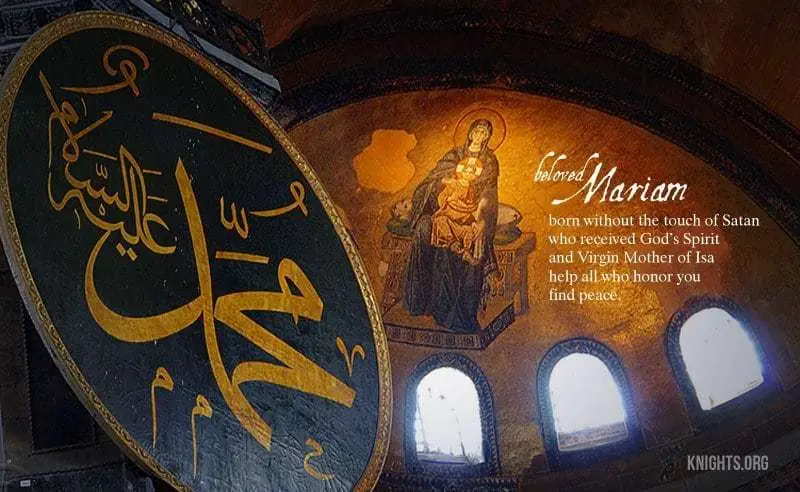
The Second Vatican Council’s declaration Nostra Aetate (section 3) says that the Church regards Muslims with esteem and identifies important points of religious and moral concern, including belief in the one God, prayer, almsgiving, fasting, and reverence for Jesus as a prophet and Mary as His virgin mother. The Council also acknowledges the long history of conflict between Christians and Muslims and urges both to work sincerely for mutual understanding, justice, peace, and freedom.
This teaching does not ask Catholics to conceal genuine theological differences. Christians confess Jesus Christ as the eternal Son of God, crucified and risen for the salvation of the world. Muslims do not share that confession. Honest dialogue requires that neither side pretend the differences are unimportant. Charity and clarity belong together.
Dialogue Must Be Grounded in Truth and Love
Dialogue is not surrender, and it is not the claim that all religions are interchangeable. Properly understood, it is a patient encounter between persons who retain their convictions while seeking understanding and the common good.
Pope Francis later told Christians in the Middle East that dialogue becomes more necessary when circumstances are difficult. He described dialogue grounded in openness, truth, and love as an antidote to religious fundamentalism, which can threaten the followers of any religion.
Catholic dialogue therefore has several purposes:
- to defend the dignity and safety of vulnerable people;
- to encourage religious freedom and peaceful civic life;
- to cooperate in works of justice and mercy;
- to correct falsehoods and prejudices through honest conversation; and
- to bear faithful witness to Jesus Christ without coercion.
Christians do not serve the truth by speaking contemptuously about others. Nor do they serve charity by refusing to speak about persecution, coercion, or profound religious differences. The Gospel requires both truth and love.
Faith, Reason, and the Rejection of Coercion
Pope Benedict XVI’s 2006 Regensburg lecture is often remembered only for a controversial medieval quotation. His larger subject was the relationship between faith and reason. He explicitly described the quoted emperor’s harsh language as unacceptable and focused attention on the underlying claim that violence is incompatible with the nature of God and cannot produce genuine faith.
Faith cannot be forced into a human soul by threats. Religious conviction requires freedom, reason, and a sincere response to truth. This principle challenges terrorism and forced conversion, but it also challenges every society that treats religion as irrational or excludes God from serious reflection on human life.
The answer to religious violence is not another form of contempt. It is a deeper union of faith, reason, moral courage, and respect for the human person.
Protecting the Innocent Without Glorifying War
The duty to pursue peace does not mean that aggression must be ignored. Asked in August 2014 about the crisis in Iraq, Pope Francis said, “Stopping an unjust aggressor is licit.” He immediately added important limits: the means must be carefully evaluated, one nation should not decide alone, and intervention must not become a pretext for conquest.
This is a morally serious position. It rejects both passivity in the face of atrocities and enthusiasm for war. Protection of the innocent must respect moral law, international responsibility, proportionality, and the goal of a just peace.
Political or military action can sometimes restrain violence, but it cannot by itself heal hatred, restore trust, or convert the human heart. Those deeper works require justice, education, truthful dialogue, forgiveness, and grace.
The Christian Response Begins with Conversion
It is easy to speak about the sins of another civilization, religion, or political faction. The Gospel first calls each Christian to conversion. We must examine whether fear has become hatred, whether anger has displaced prayer, or whether concern for persecuted believers has become an excuse for contempt.
Conversion does not make Christians passive. It strengthens the virtues needed for faithful action: prudence to judge rightly, justice to defend the vulnerable, fortitude to endure sacrifice, and charity to seek the eternal good of every person.
The future of Christianity and Islam will not be secured by slogans. Catholics are called to remain faithful to Christ, support persecuted Christians, defend religious liberty, reject terrorism and coercion, seek honest dialogue, and pray for the conversion and salvation of all.
Prayer for Mercy and Peace
Our Lady of Fatima calls her children to repentance, sacrifice, and prayer for sinners. In the face of persecution and violence, the familiar Fatima prayer directs our hope toward the mercy of Christ:
O my Jesus, forgive us our sins,
save us from the fires of hell.
Lead all souls to Heaven,
especially those most in need of Thy mercy. Amen.
Additional prayers associated with Fatima are available on the Fatima Prayers page.