
Revised and updated in September 2026.
Why does the Catholic Church call the Eucharist “the source and summit of the Christian life”? The familiar phrase is more than a devotional slogan. It summarizes a rich line of teaching that runs through the Catechism, the Second Vatican Council, and earlier papal teaching. Following that trail helps us see why every part of Christian life begins in Christ’s gift of Himself and leads us back to Him.
What Does “Source and Summit of the Christian Life” Mean?
The Catechism of the Catholic Church states in paragraph 1324:
“The Eucharist is the source and summit of the Christian life.”
A source is where something begins and receives life. A summit is the goal toward which everything rises. The Eucharist is both because it is not merely one devotion among many. In the Most Blessed Sacrament, Christ Himself—our Pasch—is truly present and gives Himself to His Church.
The other sacraments, the Church’s ministries, works of charity, prayer, sacrifice, and apostolic labor are all bound to the Eucharist and directed toward it. Everything begins with the grace of Christ, and everything finds its fulfillment in communion with Him.
Where Does the Church Teach That the Eucharist Is the Source and Summit?
The phrase comes from the Second Vatican Council. Catechism 1324 cites Lumen Gentium 11 and Presbyterorum Ordinis 5, and the same teaching appears in Sacrosanctum Concilium 10. Together they show how closely the Eucharist is bound to the identity and mission of the whole Church.
Lumen Gentium 11: offering our lives with Christ
Lumen Gentium, the Dogmatic Constitution on the Church, teaches that the Eucharistic sacrifice is the “fount and apex” of the whole Christian life. The faithful offer the Divine Victim to the Father and, united with Christ, offer themselves as well.
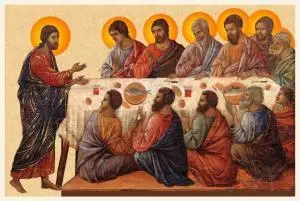
This is an essential part of the teaching. At Mass, Catholics are not spectators. Christ’s one sacrifice is made sacramentally present, and the baptized are invited to unite their prayers, work, joys, sufferings, and entire lives with His perfect offering. Holy Communion then strengthens the unity of the People of God, making visible the communion that the Eucharist both signifies and brings about.
Presbyterorum Ordinis 5: the Eucharist and the Church’s mission
Presbyterorum Ordinis, the Council’s decree on the ministry and life of priests, teaches that every ministry and work of the apostolate is joined to the Eucharist and ordered toward it. The Eucharist contains the whole spiritual good of the Church because it contains Christ Himself.
This explains why evangelization and Eucharistic life can never be separated. The Gospel draws people toward communion with Christ, while the Eucharist nourishes those who are sent back into the world as His witnesses. The altar is therefore both the destination of the Church’s missionary work and the place from which that mission receives its strength.
Sacrosanctum Concilium 10: the liturgy as summit and font
The same truth appears in Sacrosanctum Concilium 10. The sacred liturgy is the summit toward which the Church’s activity is directed and the font from which her power flows.
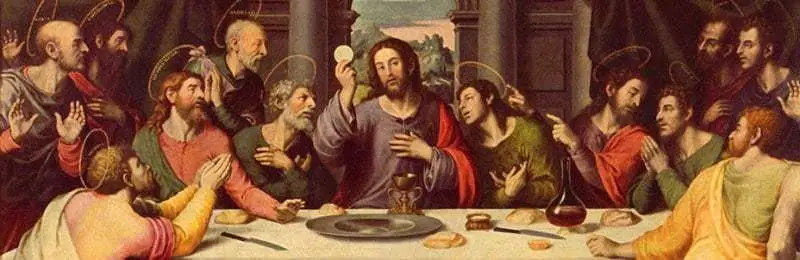
From the Eucharist, grace is poured into the life of the Church. In the Mass, the covenant between God and His people is renewed sacramentally, the faithful are drawn into Christ’s love, and God is glorified through the sanctification of His people.
Is the Eucharist Really Christ Himself?
Yes. The Church can speak this way about the Eucharist because the sacrament is not a mere symbol or a remembered absence. It contains Christ Himself: Body, Blood, Soul, and Divinity. The same Jesus who offered Himself once for all on Calvary makes His sacrifice present sacramentally under the appearances of bread and wine.
Pope Pius XII described the Eucharist as the culmination and center of the Christian religion in Mediator Dei. The language of “source and summit” therefore expresses a truth the Church has long confessed: Christian worship, holiness, unity, and mission are centered upon the Paschal Mystery of Christ.
How Do You Live a Eucharistic Life?
If the Eucharist is truly the source and summit of Christian life, then Sunday Mass cannot stay isolated from the rest of the week. Conduct, prayer, service, penance, and love of neighbor should all flow from what is received at the altar.
- Our prayer becomes Eucharistic when it begins in thanksgiving and self-offering.
- Our suffering becomes fruitful when it is united with Christ’s sacrifice.
- Our service becomes an act of communion when we recognize Christ in those entrusted to our care.
- Our mission becomes possible because Christ first nourishes and sends us.
This Eucharistic pattern shapes the life of the Knights of the Holy Eucharist, whose formation is rooted in Eucharistic adoration: silence before Christ deepens the grace received at Mass and prepares a person to serve Him in others.
For anyone seeking to grow in this life, begin simply: participate attentively in Mass, receive Holy Communion worthily, remain for a few moments of thanksgiving, and spend time with Jesus in the Blessed Sacrament. The reflection Fifteen Minutes in the Company of Jesus offers a gentle way to begin that prayer.
A trail that leads to Christ
The original footnote trail behind Catechism 1324 leads through councils, popes, and the Church’s reflection across generations. Yet every reference ultimately points beyond itself. The source is Christ. The summit is communion with Christ. The path between them is a Eucharistic life in which we receive His gift and learn to become a gift for others.
The deeper we go, the more we discover. Words lead us to silence, doctrine leads us to worship, and the Eucharist draws the whole Christian life into the heart of Jesus.