
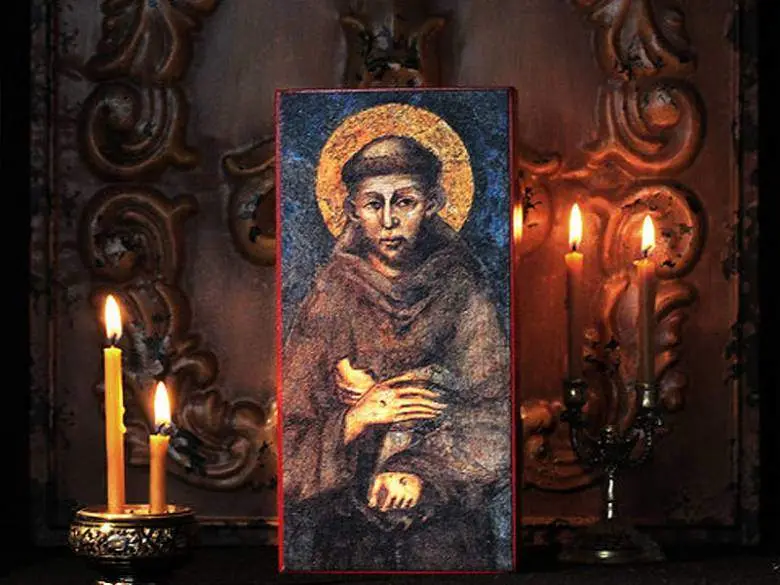
Liturgical abuse was not new to St. Francis, especially when it came to the Holy Eucharist. He writes,
“Let us all consider, O clerics, the great sin and ignorance of which some are guilty regarding the most holy Body and Blood of our Lord Jesus Christ and His most holy Name and the written words of consecration. For we know that the Body cannot exist until after these words of consecration. For we have nothing and we see nothing of the Most High Himself in this world except [His] Body and Blood, names and words by which we have been created and redeemed from death to life.
But let all those who administer such most holy mysteries, especially those who do so indifferently, consider among themselves how poor the chalices, corporals, and linens may be where the Body and Blood of our Lord Jesus Christ is sacrificed. And by many It is left in wretched places and carried by the way disrespectfully, received unworthily and administered to others indiscriminately. Again His Names and written words are sometimes trampled under foot, for the sensual man perceiveth not these things that are of God. Shall we not by all these things be moved with a sense of duty when the good Lord Himself places Himself in our hands and we handle Him and receive Him daily?”
—
Assisi Codex Title: ON REVERENCE FOR THE LORD’S BODY AND ON THE CLEANLINESS OF THE ALTAR
Why Eucharistic Reverence Matters
For St. Francis, care for the altar, sacred vessels, linens, and written words connected with the liturgy expressed faith in the Real Presence of Christ. His warning is severe because the gift is so great: Christ humbles himself to be received by his people.
Reverence is not limited to the sanctuary. Catholics can prepare for Mass prayerfully, observe the Eucharistic fast, receive Holy Communion with devotion, and make a sincere thanksgiving afterward. Quiet attention before the tabernacle and respectful conduct in church also help the body express what the heart believes.
Pray with St. Francis
The quoted text above has been preserved as it appears in the historical source. For additional Franciscan prayers and reflections, visit our collection of prayers by St. Francis of Assisi.