
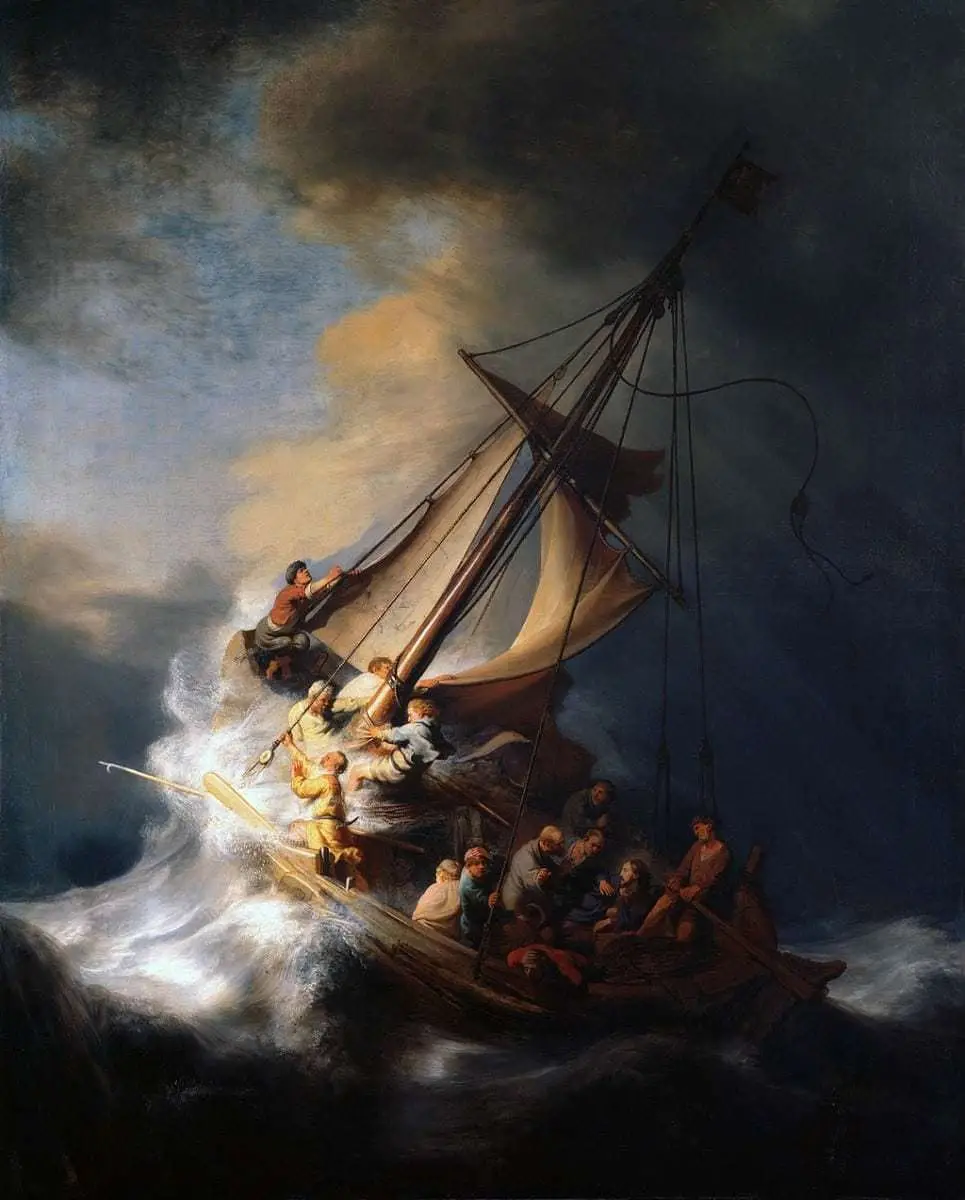
In today’s Mass Readings we hear of angels urging Lot to take his family out of Sodom on the eve of its destruction (Genesis 19:15-29) and Christ rebuking the storm on the sea (Matthew 8:23-27). If we overlay these two accounts we have a powerful reminder for us on our nation’s birthday.
Firstly, that our moral life has consequences on others and reverberates in nature (something even the ancient Greeks believed). Our sins affect our garden.
And secondly, we can build up our nation by placing ourselves, personally, under God.
If we get this ‘Eucharistic relationship’ right, and step inside God’s boat, we become good stewards of creation and good citizens adding to the transformation of our nation into a civilization of love and true independence from sin.
Let us hold fast to ‘Christ in our boat’. Let us receive him daily in the Blessed Sacrament, and we will weather the storms and be led out of the ‘burning cities’ of temptation by the angels.
Happy Independence Day!
— The Knights.
A Catholic Independence Day reflection
True freedom is more than freedom from outside control; it is the freedom to choose what is good and to remain close to Christ. The Gospel account of Jesus calming the storm reminds us that fear does not have the final word when He is present. On Independence Day, Catholics can pray for the nation, examine how personal choices affect the common good, and renew their dependence on God.
How Catholics Can Observe Independence Day
Give thanks for the legitimate freedoms and sacrifices that have shaped the nation, pray for civil leaders and those who serve the public, and remember people whose dignity or freedom is threatened. Patriotism is strengthened—not weakened—by honest concern for justice and the common good.
A practical observance might include attending Mass, praying for peace, serving a neighbor, welcoming someone who is isolated, or performing a work of mercy. Political disagreement should never excuse contempt for another person’s dignity.
Dependence on God and Service to Neighbor
Christian freedom reaches its purpose when it is used to love. Keeping Christ “in the boat” means allowing prayer, the Eucharist, conscience, and charity to shape our civic life as well as our private life.