
Updated September 18, 2026: This article was substantially revised to distinguish the Gospel, devotional traditions, and scientific hypotheses concerning the Shroud of Turin.
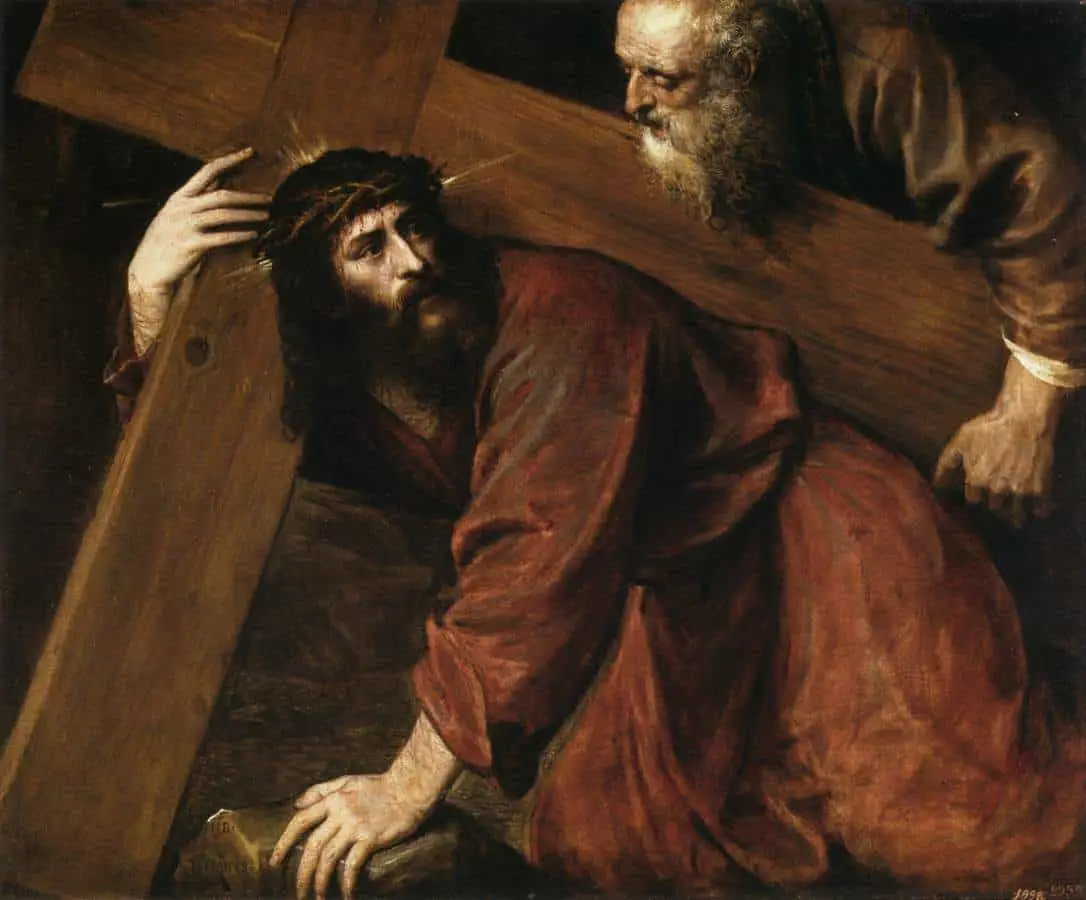
Christ’s journey to Calvary was a real work of suffering love. The Gospels tell us that Jesus went out carrying the Cross and that Simon of Cyrene was compelled to help him. They do not describe a particular wound on Christ’s shoulder. A longstanding Catholic devotion nevertheless invites the faithful to contemplate the pain he may have endured where the wood pressed upon his body.
What Scripture tells us
Saint John says that Jesus “went out, carrying the cross himself” (Jn 19:17). The Synoptic Gospels also name Simon of Cyrene, whom the soldiers pressed into service to carry the Cross (see Luke 23:26). These inspired accounts give us the sure foundation for prayer: the innocent Lord accepted humiliation, violence, and the crushing burden of the Cross for our salvation.
A painful shoulder injury is medically plausible in such circumstances, but the Gospels neither describe nor rank Christ’s wounds. We should therefore avoid claiming certainty where Scripture and the Church do not give it.
The shoulder-wound devotion
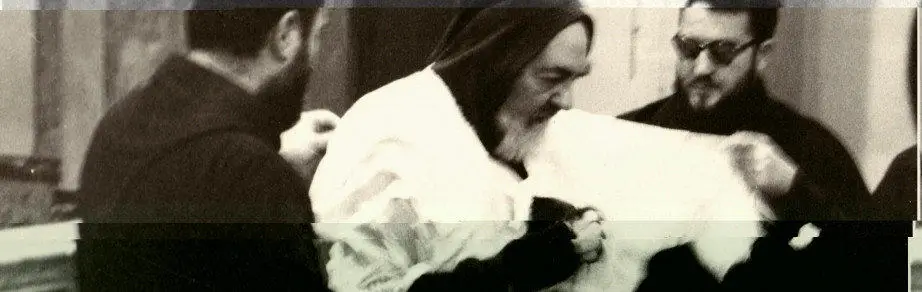
A prayer honoring a wound on Jesus’ shoulder has circulated for centuries and is often attributed to Saint Bernard of Clairvaux. The precise origin of the prayer and the promises sometimes printed with it have not been established through a reliable primary source or an official liturgical text. Similar accounts connected with Blessed Anne Catherine Emmerich and Saint Pio of Pietrelcina belong to devotional tradition and reported private experiences; they are not articles of Catholic faith.
This distinction does not make private devotion worthless. It keeps devotion in its proper place. The Catechism of the Catholic Church, no. 67, teaches that private revelations do not complete or improve Christ’s definitive Revelation. Their value is measured by whether they help the faithful live the Gospel more fully.
What the Shroud of Turin can—and cannot—prove
Some researchers have proposed that features visible on the Shroud of Turin are consistent with trauma to a shoulder or arm. Such studies can be interesting, but they do not prove the authenticity of every devotional story, and they do not establish that the man of the Shroud is Jesus.
When Saint John Paul II prayed before the Shroud in 1998, he called it a powerful “mirror of the Gospel,” while also stating that its historical and scientific questions are not matters of faith and that the Church leaves their investigation to scientists. His careful approach remains a sound guide. Read the Holy Father’s address in Turin.
Contemplating Christ’s burden
We do not need an unverified promise or a sensational headline to approach the wounded Lord. The certain truth is already inexhaustible: the Son of God loved us and gave himself for us. Meditating on his shoulder beneath the Cross can awaken repentance, gratitude, and compassion for everyone who carries a hidden burden.
You may continue that meditation with our Stations of the Cross or the Anima Christi.
Traditional Prayer to the Shoulder Wound of Jesus
The following is preserved as a traditional private devotion. It is not a substitute for the sacraments, and no unverified promise should be treated as guaranteed Church teaching.
O Loving Jesus, meek Lamb of God, I a miserable sinner, salute and worship the most Sacred Wound of Thy Shoulder on which Thou didst bear Thy heavy Cross, which so tore Thy Flesh and laid bare Thy Bones as to inflict on Thee an anguish greater than any other Wound of Thy Most Blessed Body. I adore Thee, O Jesus most sorrowful; I praise and glorify Thee and give Thee thanks for this most sacred and painful Wound, beseeching Thee by that exceeding pain and by the crushing burden of Thy heavy Cross to be merciful to me, a sinner, to forgive me all my mortal and venial sins, and to lead me on towards Heaven along the Way of Thy Cross. Amen.