
The Mysterious Origin of the Peace Prayer of St. Francis of Assisi
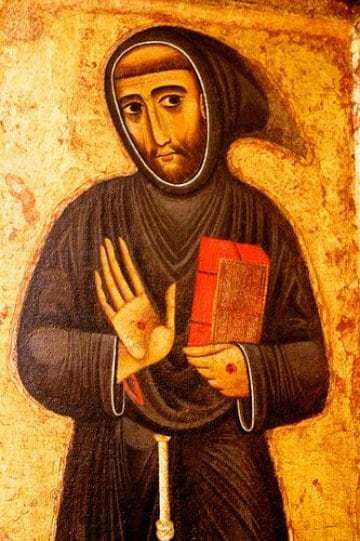
There is a connection between the Peace Prayer of St. Francis of Assisi, World War I, and Fatima. We should look closely here in our day of global persecution. The Peace Prayer of St. Francis is a famous prayer which first appeared in its current form in a French Catholic periodical in 1912. It became wildly popular in 1916 when, in the throes of World War I, Pope Benedict XV desired a prayer for peace. Although not composed by St. Francis of Assisi, it embodies the spirit of his witness, simplicity, and poverty. Mother Teresa recited it daily. Wait, wasn’t St. Francis’ mother from the northern French Duchy of Picardy? Indeed she was. A heavenly weave and connection manifest in the fabric of existence.
How a French Prayer Reached Pope Benedict XV During WWI
Digging deeper, the first appearance of the Peace Prayer occurred in France in 1912 in a small spiritual magazine called La Clochette (The Little Bell). It was published in Paris by a Catholic association known as La Ligue de la Sainte-Messe (The Holy Mass League), founded in 1901 by a French priest, Father Esther Bouquerel (1855–1923). The prayer bore the title Belle prière à faire pendant la messe (A Beautiful Prayer to Say During the Mass) and was published anonymously. The author could possibly have been Father Bouquerel himself, but the identity of the author remains a mystery. For a detailed historical study of the origins and diffusion of this prayer, see Christian Renoux, La prière pour la paix attribuée à saint François : une énigme à résoudre (Paris: Éditions franciscaines, 2001). An Italian edition was published as La preghiera per la pace attribuita a san Francesco: un enigma da risolvere (Padova: EMP – Edizioni Messaggero, 2003). I am grateful to Christian Renoux for bringing these references and the Franciscan source cited below to my attention.
In 1915, the French Marquis Stanislas de La Rochethulon sent the prayer to Cardinal Pietro Gasparri, the Vatican Secretary of State, with the hope that it would be brought to the attention of Pope Benedict XV. It subsequently appeared in Italian in L’Osservatore Romano in January 1916. Around 1920, the prayer was printed by a French Franciscan priest on the back of an image of St. Francis with the title Prière pour la paix (Prayer for Peace), but without being attributed to the saint.
Pope Benedict XV’s Plea for Peace — and Fatima, Eight Days Later
As the World War raged on, Pope Benedict XV wrote a plea for peace in a letter dated May 5, 1917: Our earnestly pleading voice, invoking the end of the vast conflict, the suicide of civilized Europe, was then and has remained ever since unheard. Indeed, it seemed that the dark tide of hatred grew higher and wider among the belligerent nations, and drew other countries into its frightful sweep, multiplying ruin and massacre. Nevertheless Our confidence was not lessened …. Since all graces which the Author of all good deigns to grant to the poor children of Adam, by a loving design of His Divine Providence are dispensed through the hands of the most holy Virgin, we wish that the petition of Her most afflicted children, more than ever in this terrible hour, may turn with lively confidence to the august Mother of God. He then asked that the invocation Queen of Peace, pray for us be permanently added to the Litany of Loreto. Then, confidently placing the peace of the world in Her hands, the Pope made another appeal: To Mary, then, who is the Mother of Mercy and omnipotent by grace, let loving and devout appeal go up from every corner of the earth – from noble temples and tiniest chapels, from royal palaces and mansions of the rich as from the poorest hut – from blood-drenched plains and seas. Let it bear to Her the anguished cry of mothers and wives, the wailing of innocent little ones, the sighs of every generous heart: that Her most tender and benign solicitude may be moved and the peace we ask for be obtained for our agitated world.
Heaven was quick to reply to this agonizing plea of the Pope and all the Christian people. Only eight days later, on May 13, 1917, the Virgin Mary appeared to the three shepherd children at Fatima.
How the Prayer Came to Be Attributed to St. Francis
Between the two world wars, the prayer circulated in Europe and was translated into English. It was first attributed to St. Francis in 1927 by a French Protestant movement, Les Chevaliers du Prince de la Paix (The Knights of the Prince of Peace), founded by Étienne Bach (1892–1986). The first English translation that we know of appeared in 1936 in Living Courageously, a book by Kirby Page (1890–1957), a Disciples of Christ minister, pacifist, social evangelist, writer, and editor of The World Tomorrow (New York City). Page clearly attributed the text to St. Francis of Assisi.
During World War II and immediately afterward, this prayer for peace began circulating widely as the Prayer of St. Francis, especially through the books of Francis Cardinal Spellman, and over the years it gained worldwide popularity among people of many faiths.
The Peace Prayer of St. Francis of Assisi
By Anonymous, c. 1912
Lord, make me an instrument of your peace.
Where there is hatred, Let me sow love;
Where there is injury, pardon;
Where there is error, truth;
Where there is doubt, faith;
Where there is despair, hope;
Where there is darkness, light;
And where there is sadness, joy.
O Divine Master, grant that I may not so much seek to be consoled As to console; To be understood, as to understand; To be loved, as to love. For it is in giving that we receive, It is in pardoning that we are pardoned, And it is in dying that we are born to eternal life.
An Echo of St. Francis’ Own Canticle of the Creatures
Although not written by the saint himself, this beautiful prayer echoes St. Francis’ own Canticle of the Creatures (FAED I, 113–114). Francis composed The Canticle of the Creatures, known also as The Canticle of Brother Sun, during the spring of 1225, when he was sick at San Damiano and was cared for by Clare and the Poor Sisters. The Canticle was composed in the Umbrian dialect and contains three sections: a praise of God for the creatures (sun, moon, stars, wind, water, fire, and earth), a praise for those who forgive for the love of God, and a praise for Sister Bodily Death. Only the first section of the Canticle was composed at San Damiano, whereas the section on forgiveness was composed in the episcopal palace in Assisi, where the sick Francis resided for some weeks in September 1226, and the section on Sister Death was composed at the Portiuncula, some time before Francis died on October 3, 1226.
Most High, all-powerful, good Lord, Yours are the praises, the glory, and the honor, and all blessing, To You alone, Most High, do they belong, and no human is worthy to mention Your name.
Praised be You, my Lord, with all Your creatures, especially Sir Brother Sun, Who is the day and through whom You give us light. And he is beautiful and radiant with great splendor; and bears a likeness of You, Most High One. Praised be You, my Lord, through Sister Moon and the stars, in heaven You formed them clear and precious and beautiful. Praised be You, my Lord, through Brother Wind, and through the air, cloudy and serene, and every kind of weather, through whom You give sustenance to Your creatures. Praised be You, my Lord, through Sister Water, who is very useful and humble and precious and chaste. Praised be You, my Lord, through Brother Fire, through whom You light the night, and he is beautiful and playful and robust and strong. Praised be You, my Lord, through our Sister Mother Earth, who sustains and governs us, and who produces various fruit with colored flowers and herbs.
Was the Prayer Really Written by St. Francis? Further Reading
As an aside, earlier scholarship offered a different account of the origins of the Peace Prayer. Friedrich W. Schulz, in “Das sogenannte Franziskusgebet. Forschungen zur evangelischen Gebetsliteratur (III),” Jahrbuch für Liturgik und Hymnologie 13 (1968), pp. 39–53, discussed the prayer in connection with a holy card depicting St. Francis. Subsequent research, however, has documented the prayer’s earlier anonymous appearance in La Clochette in 1912, before its later association with St. Francis. Regardless, it appears that St. Francis did inspire the prayer, indirectly or directly, from his garden of labor in heaven.
More information about this prayer can be found in Friar J. Poulenc, OFM, “L’inspiration moderne de la prière « Seigneur faites de moi un instrument de votre paix »,” Archivum Franciscanum Historicum, vol. 68 (1975), pp. 450–453. For a more recent Franciscan account of the history of the prayer, see Fr. Felice Autieri, “La ‘Preghiera semplice,’” published by the Custodia Generale del Sacro Convento di San Francesco in Assisi. The article discusses the prayer’s appearance in La Clochette in 1912, its subsequent diffusion, and the research of Christian Renoux.
Read “La Preghiera semplice” at the Basilica of St. Francis of Assisi: https://www.sanfrancescoassisi.org/html/ita/shownews.php?idNews=389&zone=WEBSFUomo