
What Does God See?
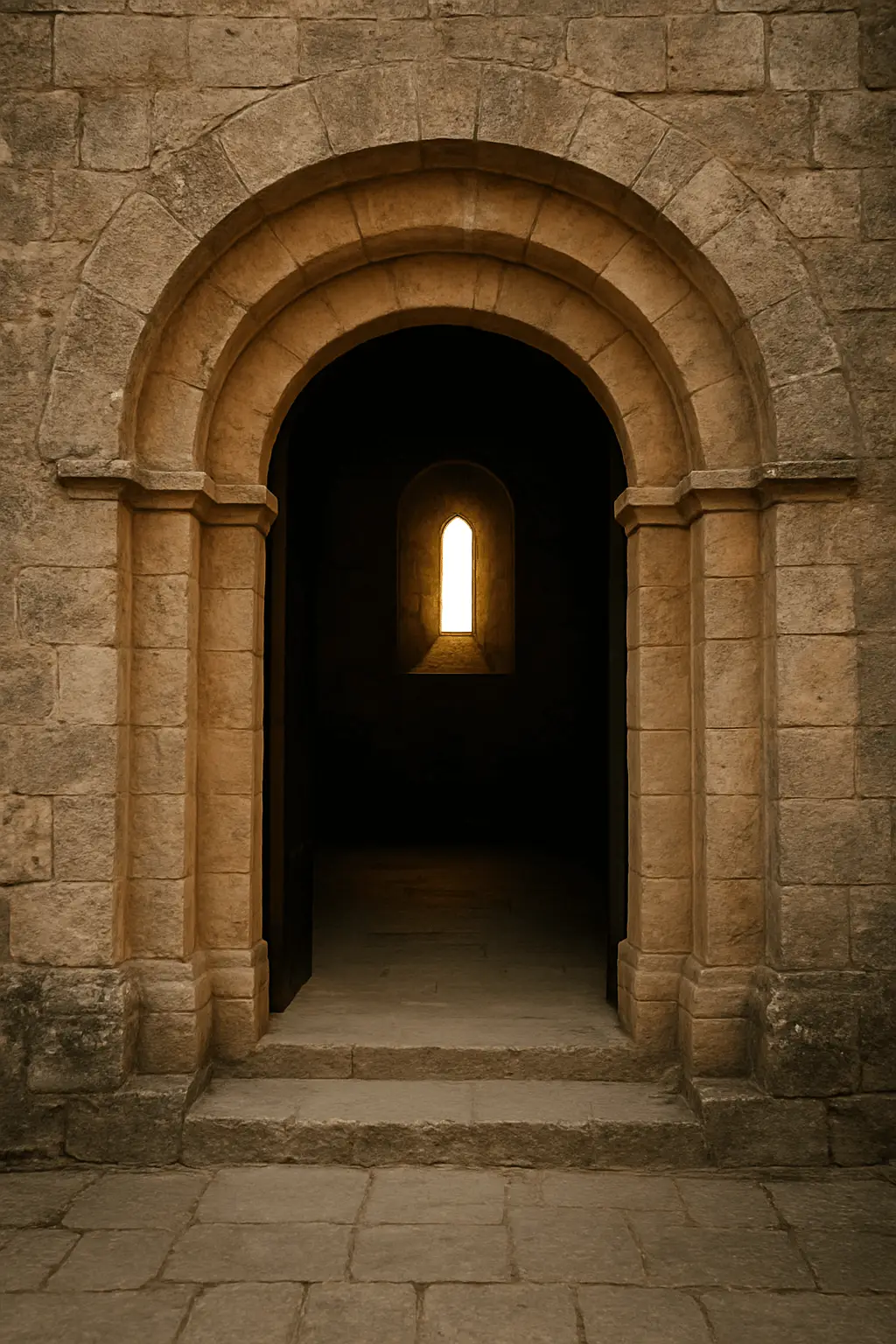
There is something deeply scriptural about stones and archways.
They mark thresholds. They invite passage. They ask something of the one who approaches. Throughout salvation history, God meets His people at gates, doors, and crossing places — areas where movement requires trust.
“Go through, go through the gates” the prophet cries, “prepare the way for the people” (Isaiah 62:10).
But before we ask what we see as we pass through, it is worth asking a deeper question: What does God see?
We are accustomed to measuring spaces by function and efficiency. Walls are barriers. Doors are entryways. Stones are building material. Yet in the language of faith, stones remember. They bear witness. They remain when words have faded (see Joshua 24:27).
Jacob marked the place where he encountered God with a stone. Israel crossed into the Promised Land through gates and rivers. Christ Himself becomes the rejected stone that the builders cast aside — and yet that stone becomes the cornerstone (Matthew 21:42).
God does not see emptiness where we see utility.
He sees covenant.
From the Mundane to the Extraordinary
Archways are not merely architectural features; they are theological statements. They frame movement from one place to another, from outside to inside, from the mundane to the extraordinary, from noise to silence. They ask us to slow down. To bow. To enter intentionally.
This is especially true when the archway leads toward the altar.
In sacred space, God sees something we often forget: He sees us approaching Him. Not as consumers or spectators, but as pilgrims. Each step forward is an act of consent — a quiet yes spoken with the body.
When we approach the Eucharist, we do not simply arrive.
We cross.
We pass from distraction into presence, from fragmentation into offering. God sees not perfection, but desire, longing, hope. He sees the soul that comes with wounds still sore, faith still fragile, love still learning how to be given.
And yet He waits.
Echoing the Fidelity of God
The stones of a shrine or church do not rush us. They stand firm, teaching us patience by their stillness. They echo the long fidelity of God, who does not abandon His dwelling even when His people forget why they came.
God sees more than our outward posture.
He sees the interior movement — the heart turning, however imperfectly, toward Him.
In a world that trains us to scan, evaluate, and pass by, sacred architecture calls us to stop and behold. It teaches us that not all seeing is the same. Some forms of vision require stillness. Others require humility.
God sees the one who lingers.
He sees the one who hesitates at the threshold, unsure but willing. He sees the one who enters carrying questions rather than answers. And He receives them all.
What does God see?
He sees His dwelling being approached once again by His beloved. He sees stones that have waited patiently for centuries to shelter prayer. He sees an archway doing what it was built to do —impress but also invite.
And in that seeing, He welcomes us home.