
Spiritual indifference is one of the quietest but deadliest threats to a life of faith — and St. Maximilian Kolbe knew exactly how to face it.
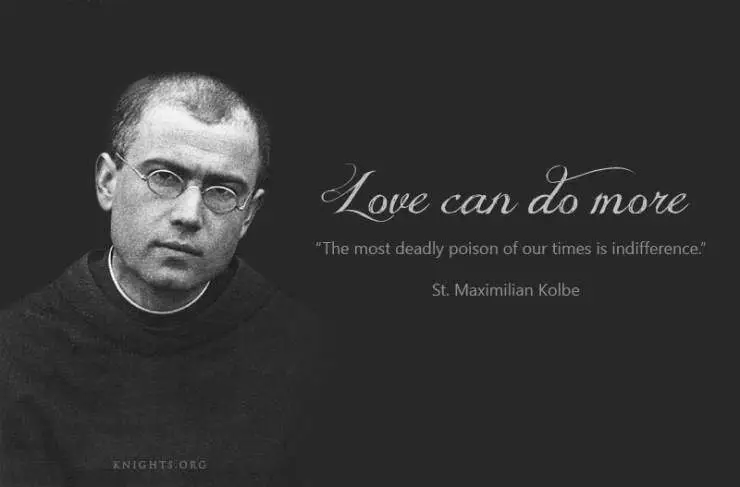
St. Maximilian Kolbe and the Poison of Indifference
Franciscan priest and martyr St. Maximilian Kolbe had much to overcome in his fruitful and dynamic life. Often regarded as the father of modern Catholic media he is the inspiration of much of Pope Saint John Paul II’s writing on the subject of the new evangelization.
But lets take a different angle today. This little saint from Zduńska Wola began his journey to sanctity by answering a call to holiness that demanded of him an overcoming of the natural human tendency to gravity (theologically a concupiscence opposed to grace), a huge part of which is indifference.
Today we are so surrounded by blasé attitudes that we’ve become somewhat indifferent to the problem of indifference.
“The most deadly poison of our times is indifference. And this happens, although the praise of God should know no limits. Let us strive, therefore, to praise Him to the greatest extent of our powers”, writes Kolbe.
Two Faces of Spiritual Indifference
Why indifference? Well because of its connection with fear, and fear is the loss of trust, especially in God’s promises. Fear grows in proportion to faithlessness, and our world is filled with the echoes of fear — easy slogans that promise happiness without the cross: that happiness is simply the absence of suffering, that life is only the absence of death, that we alone control our reality, that there is no law beyond one’s own will. The ancillary to fear is indifference. And this indifference manifests itself often in two ways.
The first is — be little and don’t stand out. This is not the “be little” maxim of St. Thérèse of Lisieux or Servant of God Catherine Doherty. Rather, it is what we could term the minnow effect. If I make myself small, unnoticed, and spend my time hiding among the many, then I am safe, or safer. We hope our silence, our minimization of “conflict” (that is, of Catholic action, or the friction that comes from simply doing the right thing) in word and deed will keep us from the gaze of the enemy.
Well guess what? Fr. Gabriele Amorth, one of the exorcists of the Diocese of Rome, argues convincingly that the devil does the maximum he is allowed to do at any given moment — in order to purify us and give us the opportunity to respond with a fiat. So the little minnow is already engaged in the battle, like it or not. And while we were busy swimming in circles, wearing ourselves thin, did we forget that we were created for greatness?
That brings us to the second expression of indifference: tepidity, or lukewarmness, which also ends in a mistrust of God. There is a certain flavor of tepidity that comes from distraction (the lures of pleasure) and from comfort (the full belly). Hungry people tend to be motivated by necessity. Are we hungry for the Lord?
St. Maximilian’s Witness in Nagasaki
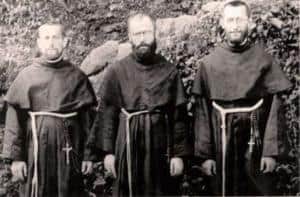
St. Maximilian gives us a page-perspective by his simple account of his arrival to Nagasaki in Memories of the past four years, “Mugenzai no Seibo no Kishi” 5, 1934, pp. 130-131.
St. Maximilian Kolbe begins, “. . . on April 24, [1930] when by ship I arrived with two Brothers by “Nagasaki” to the port — I asked myself: how will they receive me in Japan?
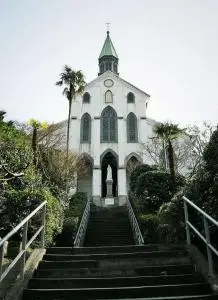
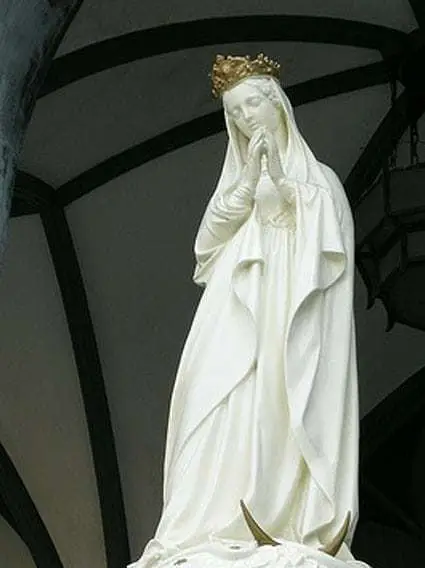
When I arrived by taxi to the church in Oura (which is now declared a National Monument), a large white statue of Our Lady with an inscription at the bottom of “Our Lady of Japan” seemed to be inviting me to enter the church. I was worn out with seasickness, but when I saw the figure, the weariness went away and I joyfully walked to the church. For a week after my arrival I lived near the church in Oura and often looked at the white statue of Our Lady of Japan.”
What great trust St. Maximilian had to embark upon a grand missionary voyage despite the rumblings of an inter-war world. The suffering and the endurance for the Lord is the currency of heaven. Such “difference” comes after the encounter with Our Lady, who offered the young Raymond Kolbe a choice between the crown of purity or that of martyrdom. True to his character, he chose both.
That makes St. Maximilian Kolbe a great role model, especially to youth: he is a kind of antidote and intercessor when we are tempted to indifference or even to minimalism — give me all of it, Lord, more challenges, more grace, so that my small frame can make you, O Jesus, more manifest.
St. Max was a maximalist with a child-like reliance on his Risen Savior and his Heavenly Mother. “To lead all men and every individual through Mary to the most Sacred Heart of Jesus,” he would say.
Love Can Do More
So today, make a difference by overcoming the indifference which lives within and without you. That is the destiny of a true knight of Christ.
Love can do more.
St. Maximilian, pray for us! Our Lady of Japan, pray for us!
Source: St. Pope John Paul II’s homily at the canonization of St. Maximilian Kolbe, October 10, 1982.