The Eucharist Is Not a Symbol
We live in a world that is comfortable with symbols and uneasy with reality. Symbols can be inspiring without being demanding. They can be admired without being obeyed. They can be placed on a shelf.
But the Eucharist is not that kind of thing.
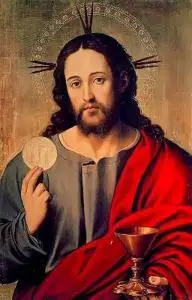
The Eucharist is not a symbol we use to remember Jesus. It is Jesus — truly present, given to the Church as the living heart of her life.
To say this is to step into the center of Catholic faith. It is also to step into a mystery that confronts our modern habits. Many people would prefer the Eucharist to remain “meaningful,” yet not too real. Something spiritual, yet not concrete. Something uplifting, yet not binding.
But Christ does not offer Himself that way.
In the Eucharist, Jesus chooses humility. He chooses to be hidden under the appearance of bread and wine. He chooses a form that can be ignored, dismissed, or treated casually. And He makes that choice not because He is weak, but because He is love.
A symbol can be manipulated. A living Lord cannot.
If the Eucharist is merely symbolic, then adoration becomes unnecessary, reverence becomes optional, and the Church’s insistence on worship becomes excessive. But if the Eucharist is truly Christ — Body, Blood, Soul, and Divinity — then everything changes.
The Church’s posture makes sense: kneeling, silence, awe, confession, careful preparation, thanksgiving.
Because this is not a religious object. This is the Lord.
A symbol points beyond itself. The Eucharist gives the One to whom all symbols point.
This matters not only for doctrine, but for daily life. When the Eucharist becomes “just a symbol,” faith slowly becomes “just a lifestyle.” The supernatural fades. Reverence cools. The sense of God’s nearness diminishes. Prayer becomes an accessory rather than a lifeline.
But when the Eucharist is recognized as real presence, the soul is re-centered. We do not merely talk about God; we encounter Him. We do not merely study love; we receive Love.
In a religious community of brothers, the Eucharist is not simply a devotion among many. It is the source. It is the daily reality that shapes our fraternity, our sacrifice, our work, and our prayer. We return again and again to the same truth: Christ has chosen to dwell with His people — not in metaphor, but in sacrament.
The Eucharist also reveals the pattern of Christian life: broken and given.
Bread is broken. Wine is poured out. Christ offers Himself. And the disciple learns that holiness is not self-protection but self-gift. The Eucharist forms us into what we receive — if we allow it.
This is why preparation matters. Not because God is picky, but because love deserves reverence. Confession, humility, and a sincere desire to turn from sin are not legalisms. They are the honest response of the heart to a holy gift.
And when we fail, the Eucharist does not become less real. It becomes a call to return. To repent. To begin again.
A symbol can be outgrown. The Eucharist cannot. The Eucharist is not a stage of faith; it is the center of faith. It is Christ’s chosen way of staying close.
If you feel far from God, do not only search for ideas. Come near to the Eucharistic Lord. Sit in His presence. Let His silence speak. Let His nearness reform your heart.
The Eucharist is not a symbol.
It is the living Jesus, still giving Himself for the life of the world.